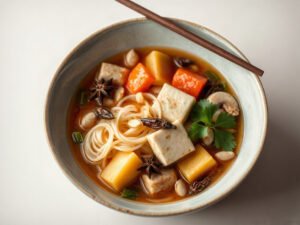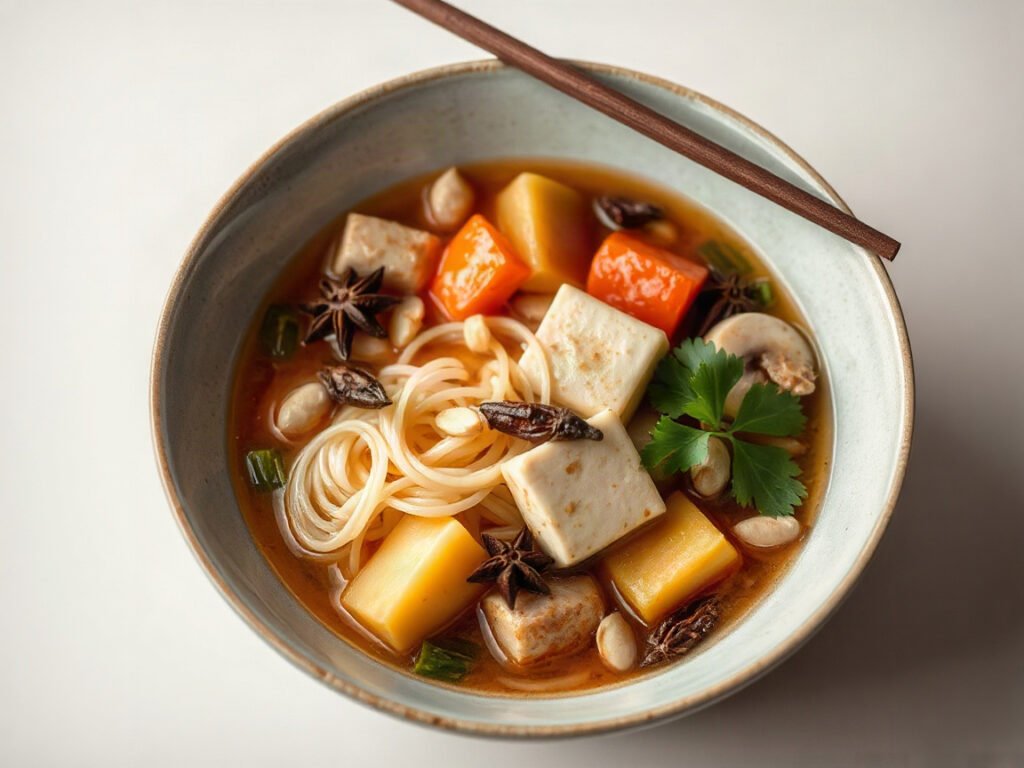
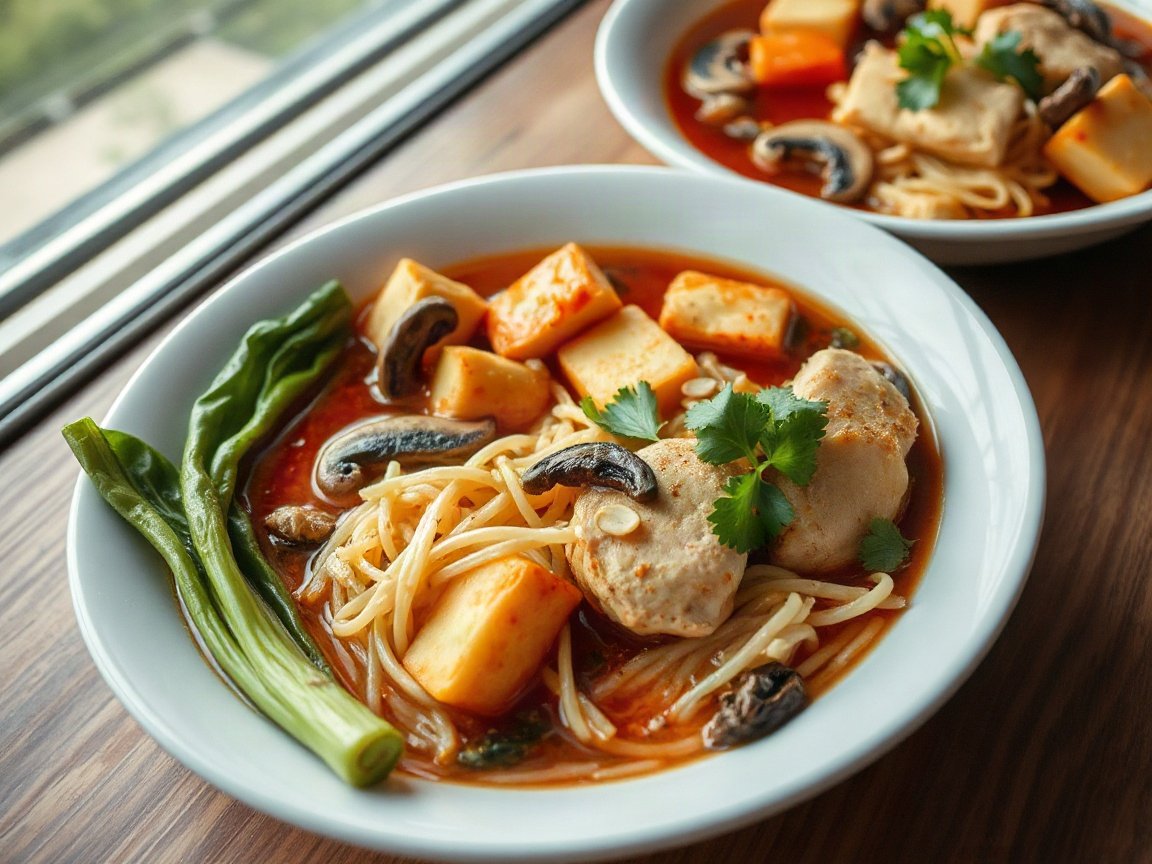
Malatang is the Sichuan street-food soup that has people lining up at new restaurants across the country: a bowl of noodles, tofu, vegetables and meat simmered in a broth that is spicy, a little numbing and deeply savory. This homemade version makes two big bowls in one pot, with no packaged hot pot base. A spoonful of chili bean paste, dried chilies and Sichuan peppercorns bloomed in oil give the broth its color and tingle, and a drizzle of sesame sauce on top makes it rich.
I kept the add-ins to a short list in cooking order, so everything lands in the bowls at the right moment and dinner is ready in about 45 minutes.
Why you’ll like this malatang
- Two big bowls from one pot. The broth, noodles, tofu, chicken and greens all cook together in one saucepan.
- No special base to hunt down. Chili bean paste and Sichuan peppercorns do the work of a packaged hot pot block.
- Heat you control. Use fewer chilies and peppercorns for a gentle bowl or add chili oil at the table for more.
- Flexible. Swap in beef, shrimp, different mushrooms or whatever greens are in the fridge.
- Restaurant fun at home. It has the same pick-your-own spirit as a malatang shop, sized for the two of you.
What malatang is
Malatang comes from Sichuan, in southwest China. The name describes the flavor: ma is the tingly, numbing feeling from Sichuan peppercorns, la is chili heat, and tang means soup. It began as street food, where vendors cooked skewers and small portions of noodles and vegetables in a big pot of spicy broth, and it has grown into a fast-casual favorite. In restaurants you fill a bowl with raw ingredients from a self-serve case, it is weighed, and the kitchen cooks everything in broth and hands it back ready to eat.
It is often compared with hot pot, and the two share the same spicy broth. The difference is who does the cooking. Hot pot is a communal meal where everyone cooks their own food in a simmering pot at the table. Malatang is cooked for you in one go and served as an individual bowl of soup, which makes it quicker and much easier to make at home.
Malatang is also hugely popular in Korea, Japan and other countries, which is why it sometimes gets mistaken for a Korean dish, but its roots are Chinese.
What makes it work
Blooming the spices gently. The Sichuan peppercorns, dried chilies and star anise cook in oil over medium-low heat just until fragrant. That carries their flavor into the oil without scorching them, which would make the broth bitter.
Frying the chili bean paste. Doubanjiang is a salty, fermented paste of broad beans and chilies, and it is the backbone of most Sichuan spicy broths. Cooking it in the oil for a couple of minutes turns the oil brick red and deepens its flavor, the same step restaurants use to build their bases.
Chicken broth instead of a packet. Packaged hot pot blocks are concentrated with fat and seasoning. Here low-sodium chicken broth adds body, so the soup tastes full without a block of tallow.
Cooking in order. Every malatang recipe follows the same rule: the longest-cooking ingredients go in first. Potato and mushrooms simmer first, then the thin chicken and tofu, and the greens and noodles go in last so nothing is overcooked.
A sesame finish. A spoonful of sesame paste thinned with hot broth softens the heat and makes each bite creamy, just like the sesame sauce many malatang shops add.
Ingredients for malatang for two
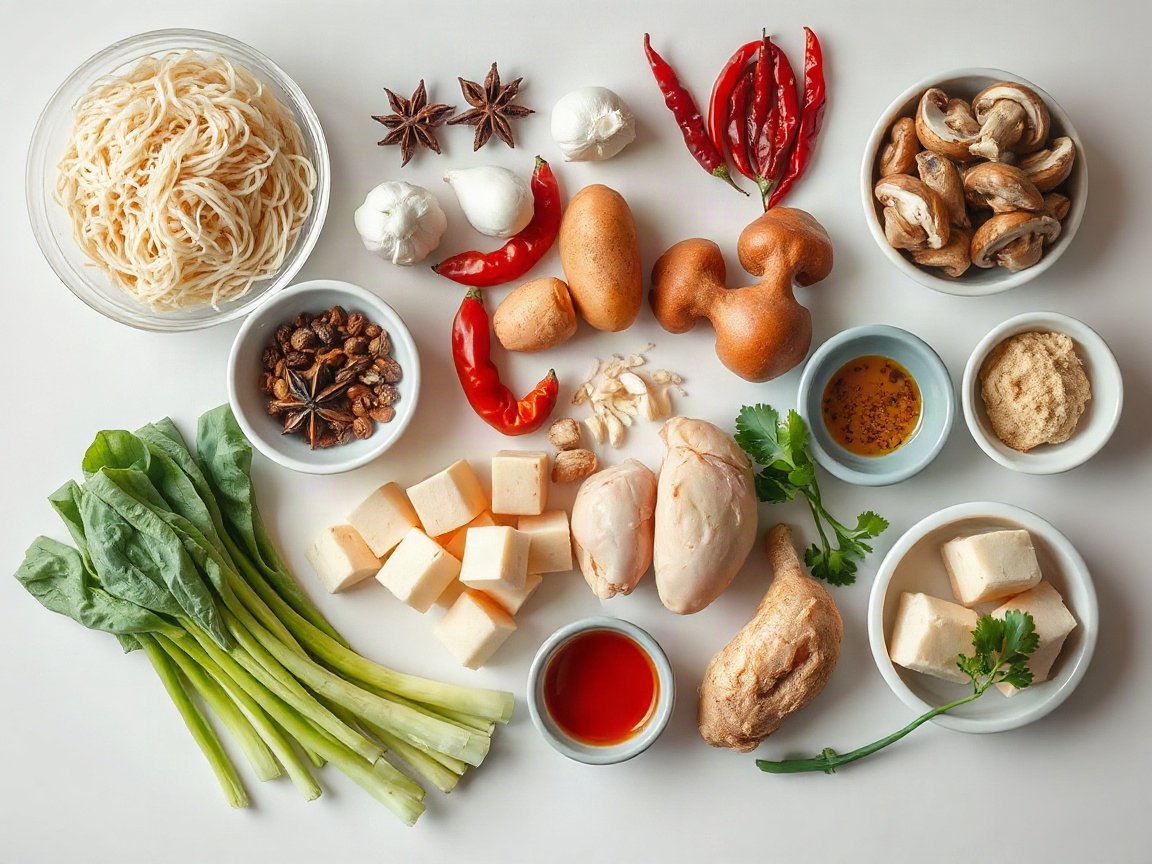
The exact amounts are in the recipe card below. These notes cover the choices that matter. Most of the Sichuan ingredients are sold at Asian grocery stores and online.
- Doubanjiang (Sichuan chili bean paste): look for a jar labeled Pixian or Sichuan broad bean paste. It is salty and spicy, so it seasons the whole pot.
- Sichuan peppercorns: the source of the numbing tingle. Whole peppercorns are easy to lift out before serving.
- Dried red chilies: any small dried chilies work. Snipping them in half releases more heat.
- Low-sodium chicken broth: low-sodium keeps the salt in check, since the bean paste and soy sauce bring plenty.
- Glass noodles: mung bean vermicelli softens in hot water in minutes and stays slippery in the soup.
- Chicken thighs: they stay tender even when sliced thin. Slicing them very thin lets them cook through in the broth quickly.
- Firm tofu, potato, mushrooms and baby bok choy: a classic malatang mix of textures, from soft tofu to tender potato slices to crisp-tender greens.
- Sesame paste: Chinese sesame paste is made from toasted seeds and tastes nuttier, but tahini works well.
How to make malatang
- Soak the glass noodles in very hot water for 10 minutes and stir the sesame paste with the sesame oil.
- Bloom the Sichuan peppercorns, chilies and star anise in oil for 1 to 2 minutes, then add the garlic, ginger and green onion whites for 1 minute.
- Fry the doubanjiang for 2 minutes, add the broth, soy sauce and sugar, and simmer for 10 minutes; lift out the whole spices.
- Simmer the potato and mushrooms for 5 minutes and thin the sesame sauce with a little hot broth.
- Add the chicken and tofu and simmer for 3 to 4 minutes, until the chicken reaches 165°F.
- Add the bok choy and noodles for 2 minutes, then ladle into two bowls and top with sesame sauce, peanuts, cilantro and green onion greens.
How to tell each stage is ready
The spiced oil. When the peppercorns and chilies are ready you will smell them right away, and the chilies will look a shade darker but not black. After the chili bean paste cooks, the oil in the pan turns brick red.
The potato. Thin slices are done when a fork slides through with no resistance. They soften the broth a little as they cook, which is part of malatang’s appeal.
The chicken. Thin slices turn white and firm within a few minutes. Check the thickest piece with an instant-read thermometer; it should read 165°F.
The greens. Bok choy is ready when the leaves are wilted and bright green and the stems still have a little crunch. Serve right away so the noodles do not soak up too much broth.
Tips for the best homemade malatang
- Set your heat level first. For a gentler bowl, start with half the chilies and peppercorns. You can always add chili oil at the table, but you cannot take heat out of the broth.
- Taste before salting. Doubanjiang brands vary a lot in saltiness, so taste the broth after it simmers and add salt only if it needs it.
- Slice the chicken partly frozen. About 15 minutes in the freezer firms the thighs so you can cut thin, even slices.
- Prep everything before you start. The cooking moves quickly once the broth is ready, so have the add-ins cut and lined up in cooking order.
- Use a slotted spoon. Lifting out the whole spices keeps anyone from biting into a peppercorn.
Add-in swaps and variations
Part of the fun of malatang is choosing what goes in your bowl, so think of the add-ins as a template.
Protein: thinly sliced beef works in place of the chicken. Peeled shrimp cook in about the same time as the greens; simmer them until pink and opaque.
Vegetables: napa cabbage, spinach, enoki mushrooms and sliced lotus root are all popular in malatang shops. Add sturdy vegetables with the potato and tender greens at the end.
Noodles: fresh udon or ramen noodles are good substitutes for glass noodles; cook them in the broth according to the package.
Extras: fish balls are a classic add-in and go in with the tofu.
How to serve it
Malatang is a full meal in a bowl, so it needs nothing else. Set out chopsticks and a soup spoon for each person, and put a small dish of chili oil and extra cilantro on the table for anyone who wants more. A plate of quick cucumber salad dressed with rice vinegar is a cool, crunchy contrast to the heat. If you love bold Sichuan flavors, try the dan dan noodles for two next.
It is a cozy dinner for a cold evening, two steaming bowls and a little sniffling from the chilies included.
Storing leftovers
Malatang is best eaten fresh, but leftovers keep. Refrigerate them within 2 hours of cooking, and store the broth and the add-ins in separate covered containers for up to 3 days; noodles left in the broth soak it up and turn soft. To reheat, bring the broth to a boil, then add the add-ins and heat until everything is steaming hot.
One pot, a few Sichuan pantry staples and a handful of add-ins are all you need for two bowls of homemade malatang. Once you have the broth down, every bowl can be a little different.
Frequently asked questions
What is the difference between malatang and hotpot?
Both use a spicy, numbing broth, but hot pot is cooked by everyone at the table in a shared simmering pot. Malatang is cooked for you all at once and served as an individual bowl of soup.
Is malatang Korean or Chinese?
Malatang is Chinese; it comes from Sichuan province. It is also very popular in Korea, which is why many people first discover it there.
What is mala tang made of?
A broth flavored with chili bean paste, dried chilies and Sichuan peppercorns, plus your choice of noodles, tofu, vegetables, mushrooms and thinly sliced meat, often finished with sesame sauce.
How spicy is malatang?
It ranges from mild to very hot depending on the chilies and peppercorns. This recipe sits in the middle, and halving the chilies and peppercorns makes it gentle.
Print
Malatang for Two (Spicy Numbing Hot Pot Soup)
- Total Time: 45 minutes
- Yield: 2 large bowls
Description
Homemade malatang for two: a spicy, numbing broth of chili bean paste, dried chilies and Sichuan peppercorns, with glass noodles, chicken, tofu, potato, mushrooms and bok choy, finished with sesame sauce.
Ingredients
- 3 ounces dried mung bean glass noodles (vermicelli)
- 2 tablespoons neutral oil, such as canola
- 2 teaspoons whole Sichuan peppercorns
- 6 dried red chilies, snipped in half
- 1 star anise
- 3 garlic cloves, minced
- 1 tablespoon minced fresh ginger
- 2 green onions, whites and greens sliced separately
- 2 tablespoons doubanjiang (Sichuan chili bean paste)
- 4 cups low-sodium chicken broth
- 1 tablespoon light soy sauce
- 1 teaspoon sugar
- 1 small Yukon Gold potato, peeled and thinly sliced
- 4 ounces shiitake or oyster mushrooms, sliced
- 8 ounces boneless, skinless chicken thighs, very thinly sliced
- 7 ounces firm tofu, cut into 3/4-inch cubes
- 2 baby bok choy, halved lengthwise
- 1 tablespoon Chinese sesame paste or tahini
- 1 teaspoon toasted sesame oil
- 2 tablespoons chopped roasted peanuts
- 2 tablespoons chopped fresh cilantro
Instructions
- Put the glass noodles in a heatproof bowl, cover with very hot tap water and soak for 10 minutes, until soft and pliable; drain. In a small bowl, stir together the sesame paste and sesame oil and set aside.
- Heat the neutral oil in a 4-quart saucepan over medium-low heat. Add the Sichuan peppercorns, dried chilies and star anise and cook for 1 to 2 minutes, stirring, until fragrant; do not let them darken. Add the garlic, ginger and green onion whites and cook for 1 minute.
- Add the doubanjiang and cook for 2 minutes, stirring, until the oil turns red. Pour in the chicken broth, soy sauce and sugar, bring to a boil, then lower the heat and simmer for 10 minutes. Lift out the peppercorns, chilies and star anise with a slotted spoon and discard them.
- Add the potato and mushrooms and simmer for 5 minutes. Stir 2 tablespoons of the hot broth into the sesame paste mixture until smooth and pourable.
- Add the chicken and tofu, separating the chicken slices, and simmer for 3 to 4 minutes, until the chicken is no longer pink and reaches 165°F.
- Add the bok choy and drained noodles and cook for 2 minutes, until the bok choy stems are just tender and the noodles are hot.
- Divide everything between 2 large bowls and ladle the broth over. Drizzle with the sesame sauce and top with the peanuts, cilantro and green onion greens. Serve hot.
Notes
Equipment: 4-quart saucepan or small Dutch oven, slotted spoon, heatproof bowl, small bowl, 2 large soup bowls
- For a milder bowl, use 3 dried chilies and 1 teaspoon of Sichuan peppercorns; for more heat, add a spoonful of chili oil at the table.
- Doubanjiang is salty; taste the broth before adding any salt.
- Very thin chicken slices cook fastest; partly freezing the thighs for about 15 minutes makes them easier to slice.
- Swap the chicken for thinly sliced beef or peeled shrimp; cook shrimp until pink and opaque, about 2 minutes.
- Other good add-ins include napa cabbage, spinach, enoki mushrooms, lotus root and fish balls; add quick-cooking greens last.
- Glass noodles can be replaced with fresh udon or ramen noodles cooked in the broth according to the package.
- Store leftover broth and add-ins separately in covered containers in the refrigerator for up to 3 days; the noodles soak up broth if stored in it.
- Reheat the broth until boiling, then add the add-ins and heat until steaming hot.
- Cook chicken to an internal temperature of 165°F (FoodSafety.gov).
- Refrigerate leftovers within 2 hours of cooking (FoodSafety.gov).
- Wash hands, knives and boards after handling raw chicken.
- Prep Time: 20 minutes
- Cook Time: 25 minutes
- Category: Main Course
- Method: Stovetop
- Cuisine: Chinese