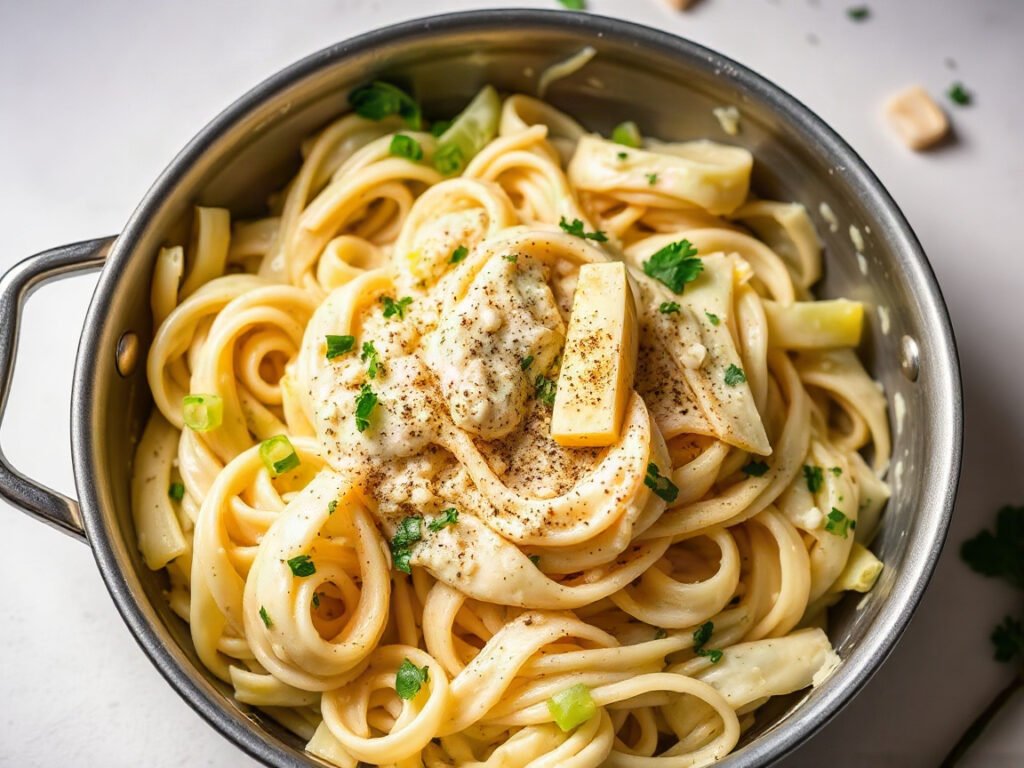
Cabbage alfredo swaps the fettuccine for wide ribbons of cabbage and keeps everything people love about the original: butter, garlic, cream and plenty of Parmesan. This version is made for two. Half a head of cabbage is browned in one skillet until tender and sweet, then tossed in a small, silky sauce that clings to every strand. It takes about 30 minutes, costs very little, and turns the humblest vegetable in the fridge into a dinner that feels a little indulgent.
I built it around one simple idea: brown the cabbage first, so it gives up its water in the pan instead of in your sauce.
Why you’ll like this cabbage alfredo
- Sized for two plates. Half a medium head makes two generous servings, and the other half is ready for slaw, soup or another night.
- One skillet. The cabbage and the sauce cook in the same pan, so there is very little to wash.
- A thick sauce, not a puddle. Browned ribbons stay tender but sturdy and do not thin the cream.
- Comfort without the pasta. It eats like a bowl of fettuccine alfredo, but the noodle is a vegetable.
- Easy to build on. Leftover chicken or a handful of shrimp turns it into a fuller meal in a minute.
What cabbage alfredo is
Cabbage alfredo is exactly what it sounds like: cabbage cut into long, noodle-like strips and coated in alfredo sauce. It spread through short cooking videos as part of a bigger moment for cabbage, which has been showing up in everything from melted wedges to dumplings. Pinterest’s 2026 trend report counted cabbage alfredo among the rising cabbage searches, and food sites started calling it this year’s answer to zucchini noodles.
The appeal is easy to see. A head of cabbage is one of the least expensive vegetables in the store, it keeps for weeks in the crisper, and when it is cooked until tender it turns mild and slightly sweet. Wide ribbons twirl around a fork the way pasta does, and a classic butter, garlic, cream and Parmesan sauce does the rest.
Recipes online take three routes: boiling the cabbage and pressing it dry, roasting the strips on a sheet pan, or cooking them in a skillet. For two people the skillet wins. It is fast, it browns the edges for flavor, and the same pan makes the sauce.
What makes it work
Wide ribbons. Cutting the cabbage about half an inch wide gives strips that soften but still hold their shape in the sauce. Thin shreds collapse into something closer to creamed cabbage, which is tasty but not the noodle effect you want.
Browning first. Cabbage is mostly water. When it cooks in hot oil, that water steams off and the edges turn golden, which adds a sweet, nutty flavor. Boiled cabbage carries its water into the sauce unless you press it out, and roasted cabbage needs the oven and a second pan. The skillet does both jobs in about 12 minutes.
A reduced sauce. The cream simmers on its own for a few minutes before the cabbage goes back in. That short reduction is what makes the sauce coat a spoon and cling to the ribbons instead of sliding off.
Cheese off the heat. Parmesan melts smoothly when it is tossed in after the pan comes off the burner. Added over high heat, it can tighten and turn grainy.
A little brightness. A bit of lemon zest and a pinch of nutmeg are classic with cream sauces. The zest keeps the dish from tasting heavy, and the nutmeg rounds out the cabbage’s sweetness without announcing itself.
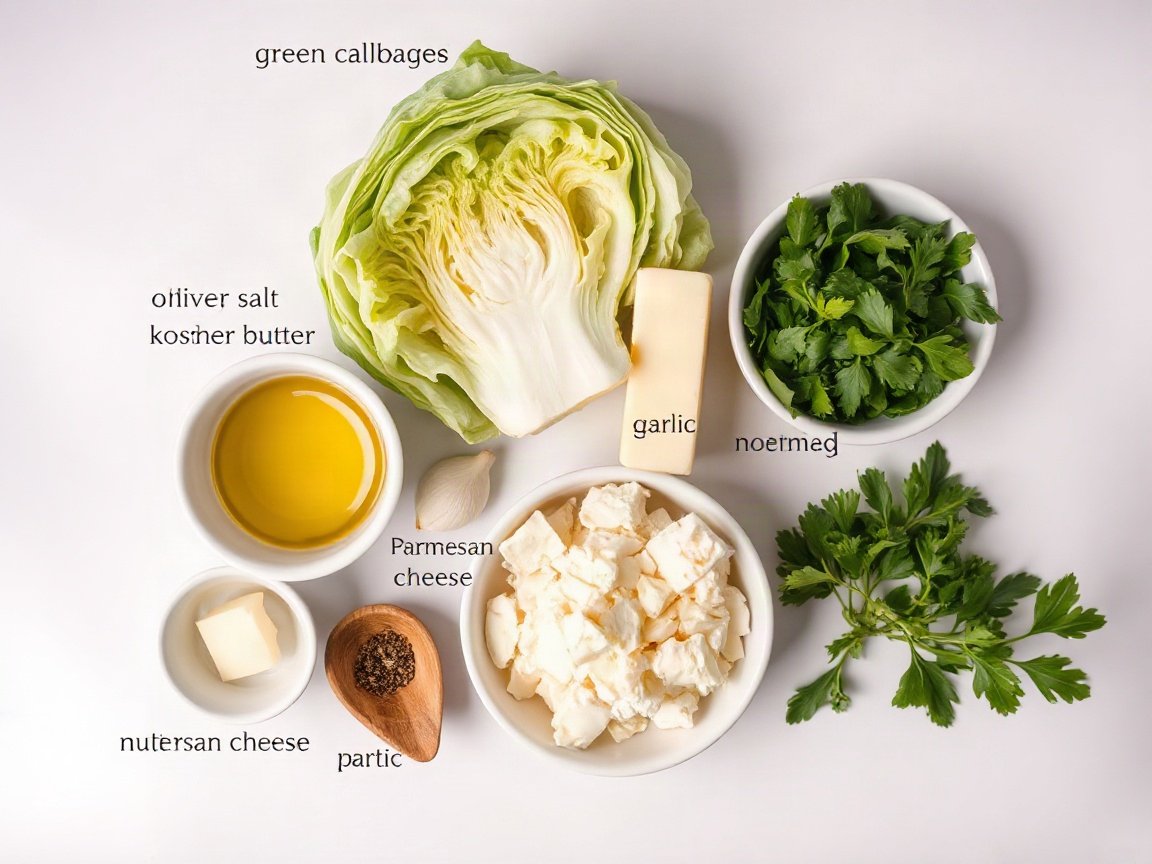
Ingredients for cabbage alfredo for two
The exact amounts are in the recipe card below. These notes cover the choices that matter.
- Green cabbage: half of a medium head, about 1 1/4 pounds. Look for a heavy, tight head with fresh outer leaves. Savoy cabbage also works and cooks a little faster.
- Olive oil: for browning the ribbons. Butter would scorch at the higher heat this step needs.
- Unsalted butter and garlic: the base of the sauce. Slicing the garlic thinly lets it soften into the butter without browning.
- Heavy cream: it reduces into a thick, stable sauce. Lighter cream or milk will not thicken the same way.
- Parmesan cheese: buy a wedge and grate it finely. Pre-shredded cheese has anti-caking agents that keep it from melting smoothly.
- Lemon zest and nutmeg: small amounts for brightness and warmth.
- Kosher salt and black pepper: the salt is split between the cabbage and the finished sauce, since the Parmesan adds salt too.
- Parsley: optional, for a little fresh color on top.
How to make cabbage alfredo
- Core the half head of cabbage, slice it into ribbons about half an inch wide and separate the layers.
- Brown the ribbons in olive oil with a little salt in a 12-inch skillet over medium-high heat for 10 to 12 minutes, then move them to a bowl.
- Lower the heat, melt the butter and soften the sliced garlic for about 2 minutes.
- Add the cream and simmer for 3 to 4 minutes, until it coats a spoon.
- Return the cabbage and toss for about 1 minute.
- Off the heat, toss in the Parmesan, lemon zest, nutmeg, pepper and the rest of the salt, and serve.
How to tell each stage is ready
The cabbage. At first the skillet looks overfilled. Keep tossing every couple of minutes; within a few minutes the ribbons shrink by about half and start to pick up golden-brown spots. They are ready when a strip bends easily and tastes tender and sweet, with a little bite left in the thicker pieces.
The sauce. Watch the bubbles. The cream should simmer gently around the edges, not boil hard. After a few minutes it will look glossier and slightly thicker. Dip a spoon in and run your finger across the back; if the line holds, it is ready for the cabbage.
The finish. Once the Parmesan goes in, the sauce turns smooth and clings to the ribbons. If a pool of sauce stays in the pan, toss for another few seconds; the cabbage will absorb it as it sits.
Tips for the best cabbage alfredo
- Separate the layers. Pull the sliced ribbons apart with your fingers before they go in the pan so they cook evenly instead of steaming in clumps.
- Let the pan get hot. Wait until the oil shimmers before adding the cabbage, then let it sit for a minute or two between tosses so it can brown.
- Keep the garlic pale. Medium-low heat lets it turn soft and sweet. Browned garlic tastes bitter in a cream sauce.
- Grate the cheese finely. A microplane gives fluffy Parmesan that melts almost instantly when the pan comes off the heat.
- Taste at the end. Parmesan brands vary in saltiness, so add the last pinch of salt only after the cheese is in.
Add-ins and swaps
Chicken or shrimp: cabbage alfredo with chicken is one of the most searched versions, and it is an easy change. Add cooked, sliced chicken or cooked shrimp with the cabbage in step 5 and toss until it is hot all the way through.
Sausage: sausage is another popular pairing. Brown sliced, fully cooked sausage in the skillet before the cabbage, set it aside, and fold it back in with the cabbage.
Savoy cabbage: its crinkly leaves are more tender, so start checking it a few minutes early.
Baked instead of skillet: some recipes roast the ribbons on a sheet pan for charred edges. The skillet method here is quicker for two and keeps everything in one pan, so the card sticks with it.
No fresh garlic: a little garlic powder stirred into the cream works in a pinch, though sliced garlic gives a sweeter, rounder flavor.
What to serve with it
As a light main, it needs very little: a crisp green salad, a few slices of toasted crusty bread to swipe through the sauce, or a bowl of tomato soup on the side. It also makes a rich side dish next to roast chicken, pork chops or a simple steak. If you like cabbage cooked low and slow with Parmesan, the melting cabbage for two is a good next recipe to try.
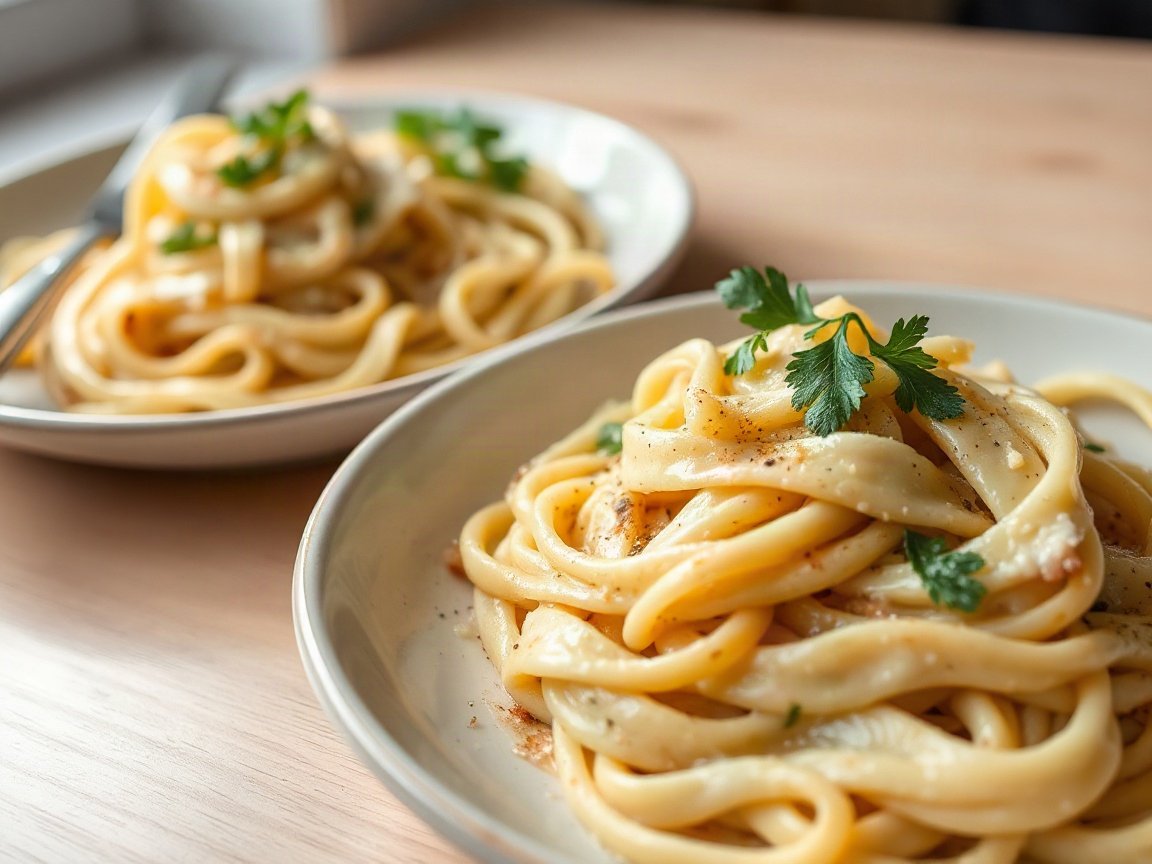
Serve it the moment it is ready, with extra Parmesan and a crack of black pepper at the table. It is the kind of quick weeknight dinner that still feels a little special when you sit down to it together.
Storing and reheating
Cabbage alfredo is at its best fresh, but leftovers keep well enough for lunch the next day. Refrigerate them in a covered container within 2 hours of cooking and eat them within 3 days.
To reheat, warm the cabbage in a skillet over low heat with a splash of cream or water, stirring often, until it is steaming hot throughout. The sauce may separate a little; the extra liquid and gentle stirring bring it back together. Freezing is not recommended because the cream sauce turns grainy when thawed.
Half a head of cabbage, a little cream and a good handful of Parmesan are all it takes to make two cozy bowls of cabbage alfredo. Once you see how the ribbons twirl around a fork, you may start buying cabbage on purpose.
Frequently asked questions
How do you keep cabbage alfredo from getting watery?
Brown the cabbage in a hot skillet before it meets the sauce. Cooking it in oil drives off most of its water, and reducing the cream on its own for a few minutes gives a sauce that coats the ribbons.
What kind of cabbage is best for cabbage alfredo?
Green cabbage holds its shape best and has a mild, sweet flavor once cooked. Savoy cabbage also works; it is more tender and cooks a few minutes faster.
Can I add chicken or shrimp to cabbage alfredo?
Yes. Add cooked chicken or cooked shrimp with the cabbage when it goes back into the sauce, and toss until everything is hot all the way through.
Can you reheat cabbage alfredo?
Yes, gently. Warm it in a skillet over low heat with a splash of cream or water, stirring until steaming hot. Leftovers keep in the fridge for up to 3 days.
Print
Cabbage Alfredo for Two
- Total Time: 30 minutes
- Yield: 2 servings
Description
Creamy cabbage alfredo for two: half a head of cabbage browned into tender ribbons in one skillet, then tossed in a garlic, cream and Parmesan sauce with a little lemon zest.
Ingredients
- 1/2 medium head green cabbage (about 1 1/4 pounds)
- 1 tablespoon olive oil
- 1/2 teaspoon kosher salt, divided
- 2 tablespoons unsalted butter
- 3 garlic cloves, thinly sliced
- 3/4 cup heavy cream
- 1/2 cup finely grated Parmesan cheese, plus more for serving
- 1/2 teaspoon finely grated lemon zest
- 1 pinch ground nutmeg
- 1/4 teaspoon black pepper
- 1 tablespoon chopped fresh parsley, optional
Instructions
- Cut out the core of the cabbage half, then slice the cabbage into ribbons about 1/2 inch wide and separate the layers with your fingers.
- Heat the olive oil in a 12-inch skillet over medium-high heat. Add the cabbage and 1/4 teaspoon of the salt and cook for 10 to 12 minutes, tossing with tongs every couple of minutes, until the ribbons are tender and browned in spots. Transfer to a bowl.
- Reduce the heat to medium-low and melt the butter in the same skillet. Add the garlic and cook for about 2 minutes, stirring, until soft and fragrant but not browned.
- Pour in the cream, bring it to a gentle simmer and cook for 3 to 4 minutes, until it thickens enough to coat a spoon.
- Return the cabbage to the skillet and toss for about 1 minute, until hot and coated.
- Take the skillet off the heat. Add the Parmesan, lemon zest, nutmeg, pepper and the remaining 1/4 teaspoon salt and toss until the cheese melts into a smooth sauce. Serve right away with more Parmesan and the parsley, if using.
Notes
Equipment: 12-inch skillet, tongs, large bowl, microplane or fine grater
- Cut the ribbons 1/2 inch wide so they hold their shape in the sauce; very thin shreds turn soft.
- Green cabbage holds up best; savoy cabbage works too and cooks a few minutes faster.
- Use a wedge of Parmesan grated finely; pre-shredded cheese melts less smoothly.
- To make it a fuller meal, toss in cooked chicken or shrimp with the cabbage in step 5 and heat until hot.
- If the sauce gets too thick, loosen it with a splash of cream or water.
- Refrigerate leftovers in a covered container for up to 3 days.
- Reheat gently in a skillet over low heat with a splash of cream or water, stirring, until hot; the sauce may separate slightly.
- Freezing is not recommended because the cream sauce turns grainy.
- Refrigerate leftovers within 2 hours of cooking (FoodSafety.gov).
- Reheat leftovers until steaming hot throughout.
- Prep Time: 10 minutes
- Cook Time: 20 minutes
- Category: Main Course
- Method: Stovetop
- Cuisine: American