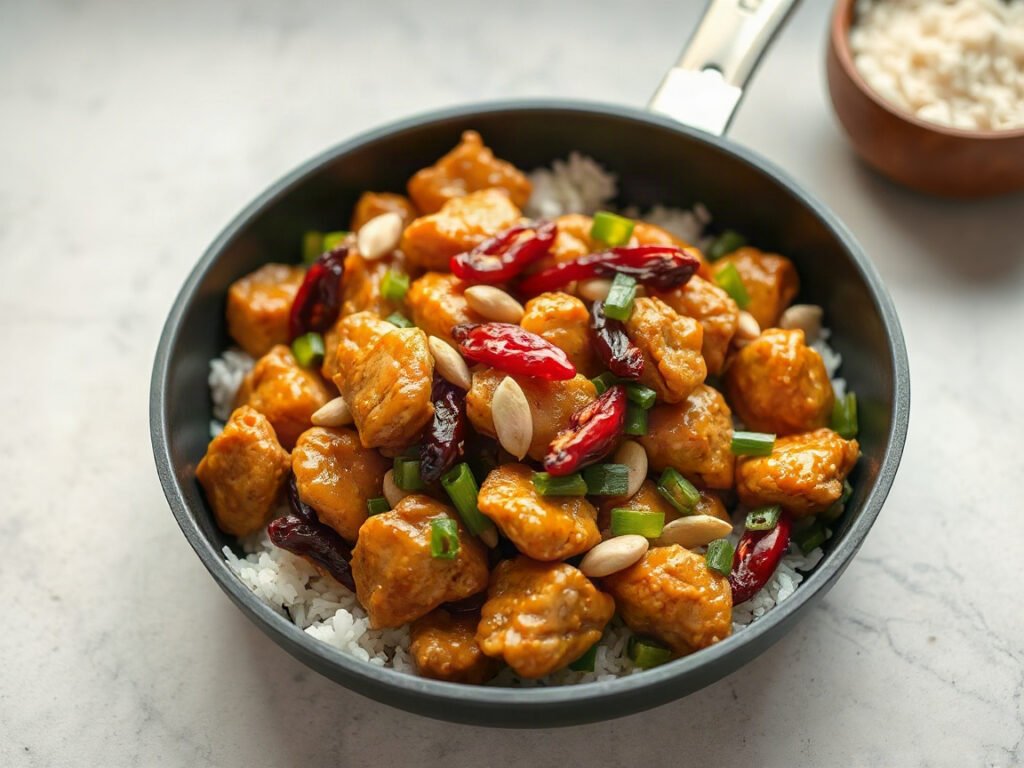
Kung pao chicken is a quick stir-fry of tender chicken, crunchy roasted peanuts and a glossy sauce that is savory, tangy, a little sweet and gently spicy. This version is sized for two: 12 ounces of chicken thighs cooked in a single layer in one skillet, with a short sauce that reduces until it clings to every piece. It takes about 30 minutes, including a short rest for the chicken, and it relies on supermarket ingredients like rice vinegar and dried chilies. If you want takeout-style flavor without cooking for a crowd, this is the right size, and the heat is easy to turn up or down.
Why you’ll like it
- Made for two: a generous portion for each person over rice, without a big pot of leftovers.
- One skillet: the chicken, the aromatics and the sauce all come together in the same pan.
- Supermarket-friendly: rice vinegar and soy sauce stand in for specialty vinegars, so there is no hunt for unusual bottles.
- Adjustable heat: use dried chilies for classic spice, pepper flakes for something gentler, or skip the heat altogether.
- Real crunch: the peanuts go in at the very end, so they stay crisp against the glossy sauce.
What is kung pao chicken?
Kung pao chicken is a classic Sichuan-style stir-fry of diced chicken, dried chilies, peanuts and scallions in a quick sauce. Restaurant versions in the United States tend to be a little sweeter and often add vegetables like bell peppers, while more traditional versions lean on a tangy, savory sauce with a hit of dried chili.
The usual cast of ingredients is simple: chicken, soy sauce, vinegar, a touch of sugar, garlic, ginger, dried red chilies, scallions and roasted peanuts, thickened with a little cornstarch. Some cooks also add ground Sichuan peppercorns for a tingly, numbing note, and a splash of cooking wine in the marinade.
People often ask how it differs from General Tso’s chicken. The big difference is the texture and the nuts. General Tso’s uses crisp, battered chicken in a sweeter, stickier sauce, while kung pao chicken is stir-fried rather than crisped, studded with peanuts and built on a tangier, lighter sauce.
What makes it work
Each part of this recipe is there for a reason. The chicken is tossed with a little cornstarch and soy sauce and left to rest for 10 minutes, which helps it brown and keeps the pieces tender. Thighs are forgiving in a fast, hot pan, so the meat stays juicy even if you cook it a moment too long.
The chicken cooks in a single layer. When pieces touch and crowd, they steam instead of browning, and the flavor suffers. A 12-inch skillet gives 12 ounces of chicken enough room to take on color.
The aromatics go into a cleared space in the middle of the pan, not on top of the chicken. That gives the chilies, garlic and ginger direct contact with the hot surface for about 30 seconds, long enough to bloom without burning.
Finally, the sauce is short on purpose. With only a few spoonfuls of liquid and a teaspoon of cornstarch, it reduces quickly into a glossy, syrupy coat. The peanuts and scallion greens go in last so they keep their crunch and their color.
How it is sized for two
Most kung pao chicken recipes serve four to six, so this one is built for two rather than simply cut in half. Twelve ounces of boneless thighs gives about six ounces of chicken per person, which is plenty over a bowl of rice. The sauce is scaled to match, with enough liquid to coat the chicken without pooling in the pan.
The pan matters as much as the quantities. A 12-inch nonstick skillet is wide enough to hold all the chicken in one layer, so you skip the batch cooking that a bigger recipe needs, and everything finishes in minutes. If you only have a smaller skillet, cook the chicken in two rounds and move it to a plate before making the sauce.
Because the recipe is quick, it suits a weeknight when you want dinner on the table without a pile of dishes.
Ingredients for kung pao chicken
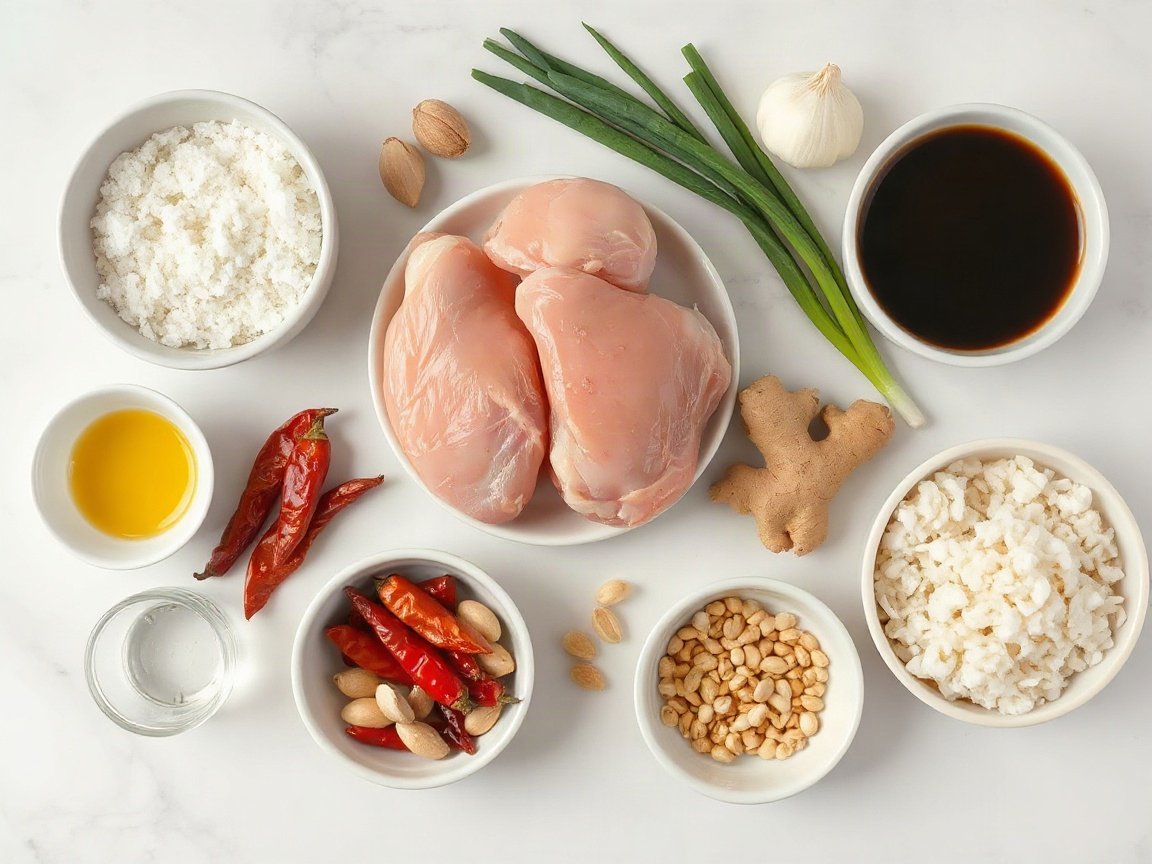
Exact amounts are in the recipe card below. Here is how to choose each one.
- Chicken thighs: boneless and skinless, cut into even 3/4-inch pieces so they cook at the same pace.
- Cornstarch and soy sauce for the chicken: a light coating that helps the chicken brown and stay tender.
- Dried red chilies: snipped in half with the seeds shaken out for flavor and moderate heat. Crushed red pepper flakes work too.
- Garlic, ginger and scallions: fresh for the best flavor. Separate the scallion whites, which cook with the aromatics, from the greens, which finish the dish.
- Roasted unsalted peanuts: unsalted lets you control the seasoning, and roasted ones are crunchy right away.
- Low-sodium soy sauce: for savory depth without making the sauce too salty as it reduces.
- Rice vinegar: brings the tang and is easy to find in any supermarket.
- Sugar and toasted sesame oil: a little sugar rounds out the vinegar, and a touch of sesame oil adds aroma.
- Neutral oil: canola or vegetable oil handles medium-high heat well.
- Steamed rice: to serve.
How to make kung pao chicken
- Toss the chicken with cornstarch and soy sauce and let it rest while you prepare the rest.
- Whisk the sauce ingredients together in a small bowl.
- Cook the chicken in a single layer in a hot skillet until browned and cooked through.
- Cook the chilies, garlic, ginger and scallion whites in a cleared space until fragrant.
- Add the sauce, simmer until glossy and syrupy, then stir in the peanuts and scallion greens and serve over rice.
Step-by-step notes
Resting the chicken. Toss the pieces until each one has a thin, even coat, then leave the bowl on the counter for 10 minutes. Use that time to mix the sauce, slice the scallions and mince the garlic and ginger so nothing waits on the stove.
Browning. Heat the oil over medium-high heat until it shimmers, then spread the chicken out in one layer. Let it sit for the first minute so it can sear, then stir now and then for a total of 3 to 4 minutes. The pieces are done when they are browned outside and white all the way through, at 165°F inside.
Blooming the aromatics. Push the chicken to the edge of the pan and add the chilies, garlic, ginger and scallion whites to the empty center. Stir for about 30 seconds, just until fragrant. If the chilies darken quickly, lift the pan off the heat for a moment, since scorched chilies turn bitter.
Reducing the sauce. Stir the sauce again, because the cornstarch settles, then pour it in. Simmer for 1 to 2 minutes, stirring, until it turns glossy and syrupy and coats the back of a spoon. Toss everything together, then fold in the peanuts and scallion greens and serve right away.
Tips and variations
- Dry the chicken first. Pat the pieces with a paper towel before coating so the cornstarch sticks and the chicken browns.
- Cut evenly. Pieces of similar size finish together, so none are dry while others are still pink.
- Taste the sauce. If it tastes too sweet, add a few drops more rice vinegar at the end; if it tastes too sharp, a pinch more sugar balances it.
- Control the heat. More chilies or a pinch of pepper flakes make it hotter, while leaving the seeds out and using fewer chilies keeps it mild.
- Add vegetables. Diced bell pepper cooked briefly before the chicken makes the dish heartier, in the style of many American takeout versions.
- Stir in the peanuts last. Added at the end, they stay crunchy instead of softening in the sauce.
Substitutions
- Chicken breast: slice it into even pieces and cook only until it is white all the way through, since it is leaner than thigh meat and dries out sooner.
- Crushed red pepper flakes: use them in place of the dried chilies for a gentler, more even heat.
- Cashews: swap them in for the peanuts for a slightly sweeter crunch.
- Tamari: use it instead of soy sauce if you prefer.
- Sichuan peppercorns: if you have them ground, add a pinch with the garlic for the tingly note that traditional versions are known for.
What to serve with it
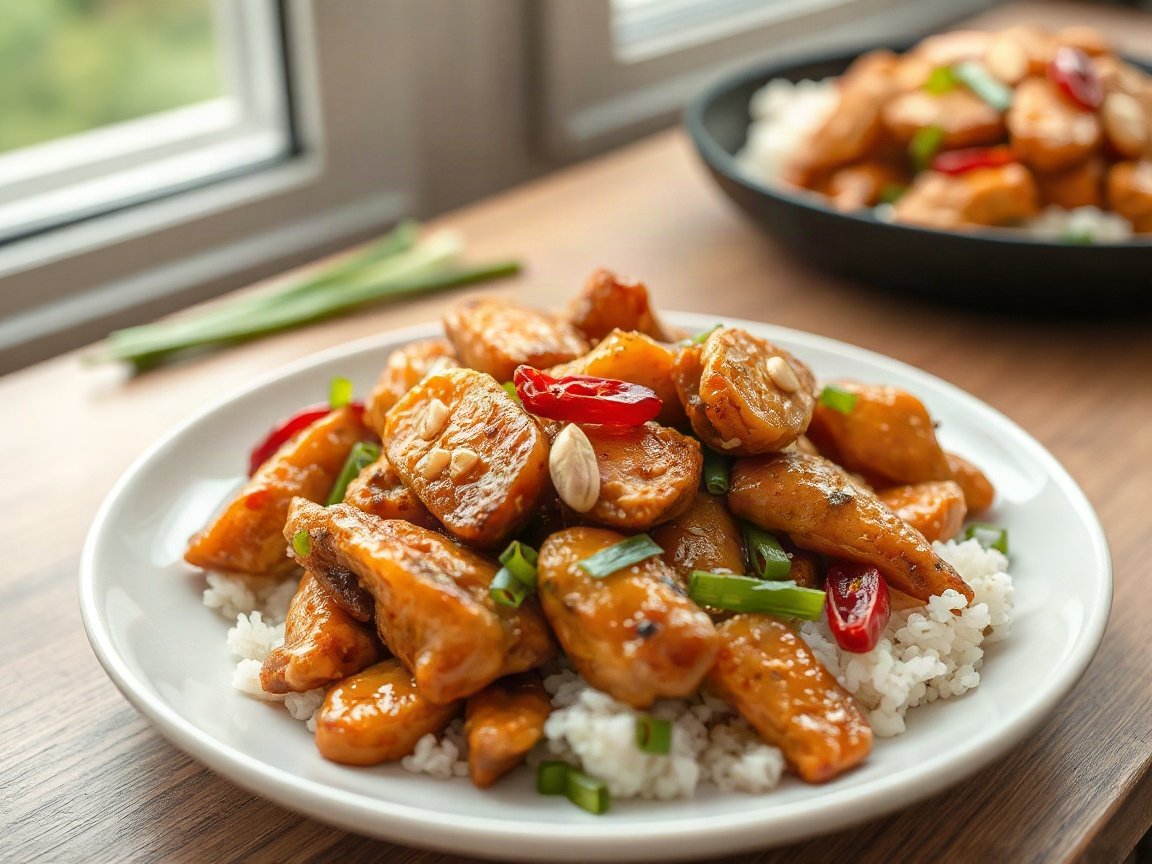
Kung pao chicken is best over a bowl of rice that soaks up the sauce.
- Steamed jasmine or white rice is the classic partner.
- Steamed broccoli or green beans add color and a fresh bite on the side.
- A quick cucumber salad cools the heat and adds crunch.
- Plain noodles turn it into a bigger meal.
For another quick one-pan dinner for two, try our simple stir fry for two.
Storage and reheating
Refrigerate leftovers in an airtight container within 2 hours and eat them within 3 to 4 days. Reheat in a skillet with a splash of water until hot all the way through, which also loosens the sauce again. The peanuts soften as they sit, so a handful of fresh ones stirred in at the end brings the crunch back.
A hot skillet, a glossy sauce and a handful of peanuts: a weeknight dinner for two that feels like a night off from the stove.
Frequently asked questions
What is typically in Kung Pao Chicken?
It usually has diced chicken, roasted peanuts, dried red chilies, garlic, ginger and scallions in a sauce of soy sauce, vinegar and a little sugar, thickened with cornstarch.
What’s the difference between General Tso’s and Kung Pao Chicken?
General Tso’s uses crisp, coated chicken in a sweeter, sticky sauce, while kung pao chicken is stir-fried with peanuts and dried chilies in a tangier, lighter sauce.
Is Kung Pao very spicy?
It can be, but the heat is up to you. The dried chilies and their seeds carry most of it, so using fewer chilies, shaking out the seeds or swapping in pepper flakes makes it milder.
Is Kung Pao Chicken healthy?
It is a home-cooked stir-fry built on chicken and a short sauce, and serving it with steamed vegetables alongside the rice makes it a balanced dinner. How it fits your own diet depends on your needs, so adjust the sugar, soy sauce and peanuts to suit you.
Can I use chicken breast instead of thighs?
Yes. Cut it into even pieces and cook it only until it is white all the way through, since breast meat dries out faster than thigh meat.
Print
Kung Pao Chicken for Two
- Total Time: 30 minutes
- Yield: 2 servings
Description
Kung pao chicken for two: browned chicken thigh pieces and roasted peanuts in a glossy sweet, tangy and gently spicy sauce, made in one skillet.
Ingredients
- 12 ounces boneless, skinless chicken thighs, cut into 3/4-inch pieces
- 2 teaspoons cornstarch, for the chicken
- 2 teaspoons low-sodium soy sauce, for the chicken
- 2 tablespoons neutral oil, such as canola or vegetable oil
- 3 dried red chilies, snipped in half, seeds shaken out (or 1/2 teaspoon crushed red pepper flakes)
- 2 garlic cloves, minced
- 2 teaspoons minced fresh ginger
- 3 scallions, whites and greens separated, thinly sliced
- 1/3 cup roasted unsalted peanuts
- 3 tablespoons water
- 1 1/2 tablespoons low-sodium soy sauce, for the sauce
- 1 1/2 tablespoons rice vinegar
- 1 tablespoon granulated sugar
- 1 teaspoon cornstarch, for the sauce
- 1/2 teaspoon toasted sesame oil
- steamed rice, to serve
Instructions
- In a medium bowl, toss the chicken with the 2 teaspoons cornstarch and the 2 teaspoons soy sauce until evenly coated. Let it rest for 10 minutes while you prepare everything else.
- In a small bowl, whisk the water, the 1 1/2 tablespoons soy sauce, the rice vinegar, sugar, the 1 teaspoon cornstarch and the sesame oil until smooth. Set aside.
- Heat the oil in a 12-inch nonstick skillet over medium-high heat. Add the chicken in a single layer and cook for 3 to 4 minutes, stirring now and then, until browned and cooked through. Push the chicken to the edge of the pan.
- Add the chilies, garlic, ginger and scallion whites to the cleared center and cook for 30 seconds, until fragrant, stirring so the chilies do not scorch.
- Stir the sauce, pour it into the pan and simmer for 1 to 2 minutes, stirring, until glossy and syrupy. Toss everything together, then stir in the peanuts and scallion greens. Serve right away over rice.
Notes
Equipment: 12-inch nonstick skillet, small bowl, medium bowl, spatula
- Cut the chicken into even 3/4-inch pieces so they cook at the same pace.
- Cook the chicken in a single layer: a crowded pan steams instead of browning.
- Keep the chilies moving in the pan, since scorched chilies turn bitter.
- Let the sauce reduce until it clings, but take the pan off the heat as soon as it turns glossy and syrupy.
- Use crushed red pepper flakes for less heat, or leave out the chilies for a mild version.
- Doneness: The chicken is done when it is browned outside and white all the way through, at 165°F inside; the sauce should be glossy and cling to the chicken and peanuts.
- Refrigerate leftovers in an airtight container within 2 hours and eat within 3 to 4 days. Reheat in a skillet with a splash of water until hot all the way through.
- Cook chicken to an internal temperature of 165°F and refrigerate leftovers within 2 hours (USDA FSIS).
- Prep Time: 20 minutes
- Cook Time: 10 minutes
- Category: Dinner
- Method: Stovetop
- Cuisine: Chinese-American