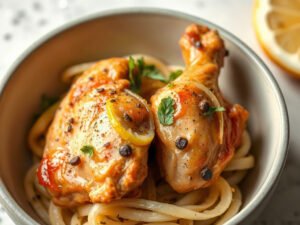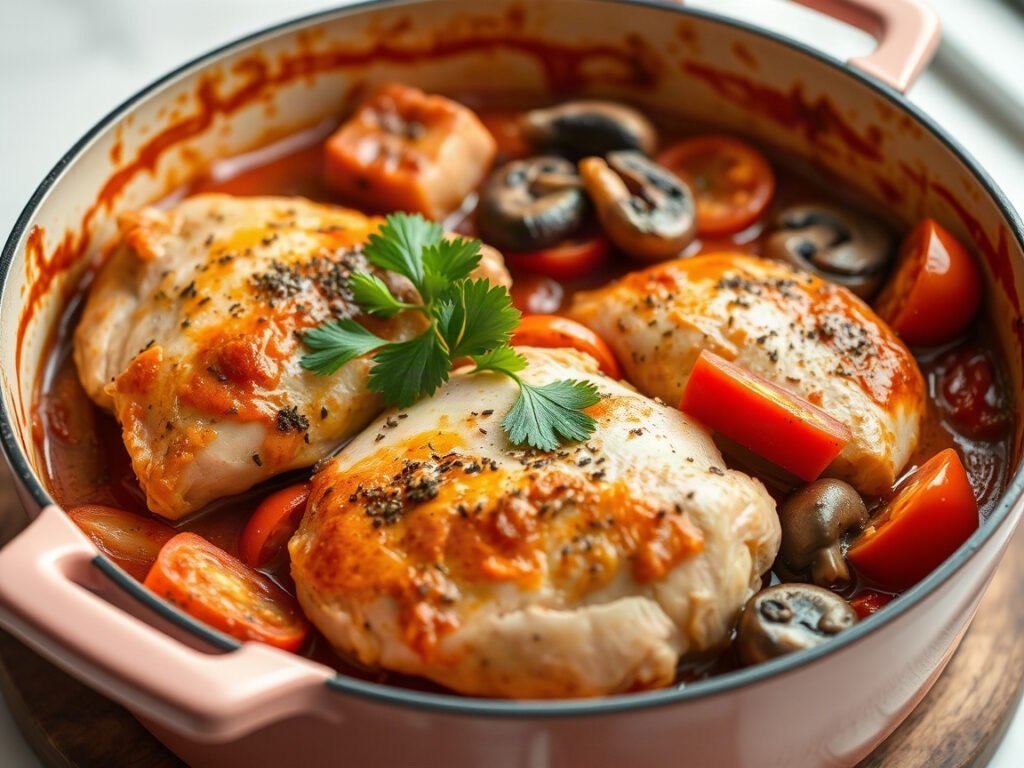
Chicken cacciatore is a rustic Italian-American braise: bone-in chicken simmered with peppers, mushrooms and tomatoes until the meat is tender and the sauce turns rich and thick. This version is made for two, in one deep skillet, with four bone-in, skin-on thighs and a sauce built from tomato paste, diced tomatoes and broth. It is a slow-simmered style of dinner that needs very little attention once the chicken is browned, and it smells wonderful while it cooks. Spoon it over pasta, polenta or mashed potatoes and you have a cozy dinner that feels like it took all day but did not.
Why you’ll like it
- Made for two: two thighs each, with plenty of sauce and no big pot of leftovers.
- One skillet: the chicken, the vegetables and the sauce all cook in the same pan.
- Mostly hands-off: after browning, the chicken simmers on its own.
- Budget-friendly: bone-in thighs, a can of tomatoes and a few vegetables go a long way.
- No wine needed: a rich sauce from tomato paste and broth, without opening a bottle.
What is chicken cacciatore?
Cacciatore means hunter in Italian, and the name points to a hunter-style braise: chicken cooked slowly with tomatoes, onions, peppers, mushrooms and herbs. Recipes vary from region to region and cook to cook, but the idea stays the same. Brown the chicken, build a sauce in the same pan, then simmer everything together until the meat is tender and the sauce has deepened.
Many versions use red or white wine, and some add olives, capers or anchovies. This recipe skips the wine and replaces it with chicken broth, and it keeps the flavors simple: oregano, garlic, tomato paste and a bay leaf. The result tastes classic and cozy, and you can add olives or capers if you like them.
What makes it work
The first step is browning the chicken skin side down. The skin turns deeply golden and renders its fat, and the browned bits that stick to the pan become the base of the sauce. Pouring off the extra fat keeps the sauce from tasting greasy.
The tomato paste goes in with the garlic and oregano before any liquid. Cooking it for a minute darkens it slightly and gives the sauce a deeper, sweeter tomato flavor than diced tomatoes alone.
The thighs are nestled back into the sauce skin side up, so the skin stays above the liquid instead of going soft. They simmer covered at a gentle heat, which keeps the dark meat tender, and then the lid comes off for the last stretch. That uncovered finish thickens the sauce so it clings to the chicken, rather than running thin across the plate.
How it is sized for two
Most chicken cacciatore recipes call for six to eight chicken pieces and a large can of tomatoes. This version scales that down to four bone-in thighs, about 1 1/2 pounds in total, which gives two thighs per person. The vegetables are halved to match, and the sauce uses a standard 14.5-ounce can of diced tomatoes with a half cup of broth, so nothing is left half-used in the fridge.
A deep 12-inch skillet or braiser with a lid fits four thighs in a single layer and leaves room for the sauce around them. A pan that is too large lets the sauce reduce too fast, while one that is too small crowds the chicken and keeps the skin from browning.
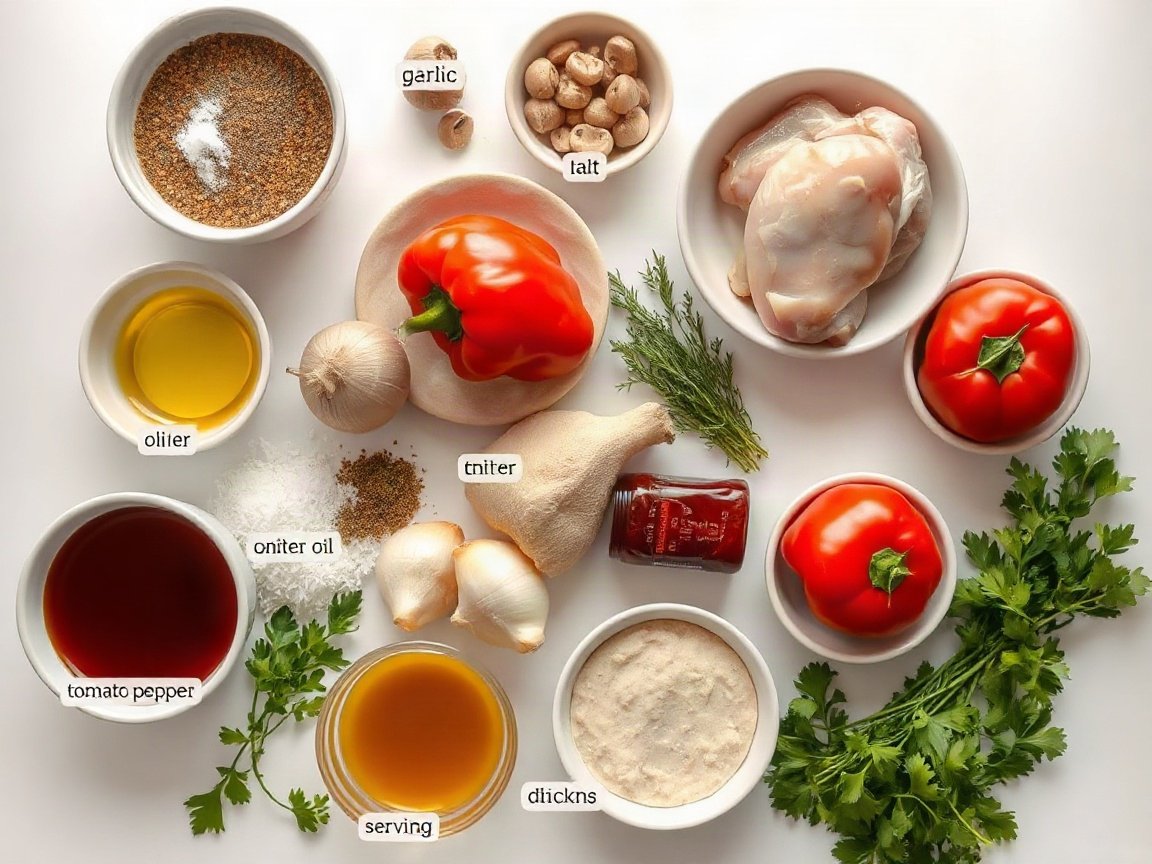
Ingredients for chicken cacciatore
Exact amounts are in the recipe card below. Here is how to choose each one.
- Bone-in, skin-on chicken thighs: they stay juicy in a braise, and the skin and bones add flavor to the sauce.
- Onion, red bell pepper and mushrooms: the classic trio. Cremini mushrooms have more flavor than white ones.
- Garlic and dried oregano: the main seasonings, with a bay leaf added to the sauce.
- Tomato paste: concentrated tomato flavor and body.
- Canned diced tomatoes: use the whole can, with its juices.
- Low-sodium chicken broth: thins the sauce slightly and replaces the wine in traditional recipes.
- Fresh parsley: for a fresh finish.
- Pasta, polenta or mashed potatoes: to catch the sauce.
How to make chicken cacciatore
- Season the chicken and brown it skin side down in a deep skillet, then set it aside.
- Cook the onion, bell pepper and mushrooms in the same pan until softened.
- Add the garlic, oregano and tomato paste, then stir in the tomatoes, broth and bay leaf.
- Nestle the chicken back in, skin side up, cover and simmer.
- Uncover to thicken the sauce, then finish with parsley and serve.
Step-by-step notes
Browning. Pat the thighs very dry and season them well. Heat the oil until it shimmers, then lay the thighs skin side down in a single layer and leave them alone for 6 minutes, until the skin is deeply golden and releases easily from the pan. Turn them for 2 minutes more, then move them to a plate. Pour off all but about a tablespoon of fat.
Building the sauce. Lower the heat to medium and cook the onion, pepper and mushrooms for 5 minutes. Add the garlic, oregano and tomato paste and stir for 1 minute, until the paste darkens a little. Stir in the diced tomatoes with their juices, the broth and the bay leaf, scraping the browned bits from the bottom of the pan, then bring it to a simmer.
Braising. Nestle the chicken back into the sauce, skin side up, and pour in any juices from the plate. Cover, turn the heat to medium-low and simmer for 25 minutes.
Finishing. Remove the lid and simmer for 10 minutes more. The sauce should thicken and coat the back of a spoon. The chicken is ready when a thermometer in the thickest part of a thigh, away from the bone, reads at least 165°F and the meat pulls easily from the bone. Remove the bay leaf and sprinkle with parsley.
Tips and variations
- Brown well. Deep color on the skin means deep flavor in the sauce.
- Keep the skin above the sauce. Nestling the thighs skin side up keeps the skin from turning soft.
- Simmer gently. A few small bubbles are enough; a hard boil can toughen the meat and scorch the sauce.
- Thicken to taste. If the sauce is thinner than you like, simmer it a few minutes longer with the lid off.
- Add extras. Stir in a handful of olives or a spoonful of capers near the end for a briny kick.
- Add heat. A pinch of red pepper flakes brings a gentle kick.
Substitutions
- Drumsticks: use them in place of some of the thighs, since they braise the same way.
- Boneless thighs: they cook faster, so skip the covered simmer time and check them with a thermometer sooner.
- Green bell pepper: swap it for the red pepper if you prefer a sharper flavor.
- Italian seasoning: use it in place of the oregano.
- Wine: if you like the traditional flavor, replace the broth with the same amount of dry red or white wine and let it reduce briefly before adding the tomatoes.
What to serve with it
Chicken cacciatore wants something to soak up the sauce.
- Creamy polenta is the classic partner.
- Pasta like rigatoni, penne or egg noodles carries the sauce well.
- Mashed potatoes make it a comforting meal.
- Crusty bread and a green salad round it out.
Storage and reheating
Refrigerate leftovers in an airtight container within 2 hours and eat them within 3 to 4 days. Reheat over low heat until steaming hot, to 165°F, adding a splash of broth if the sauce has thickened. Like many braises, it tastes even better the next day.
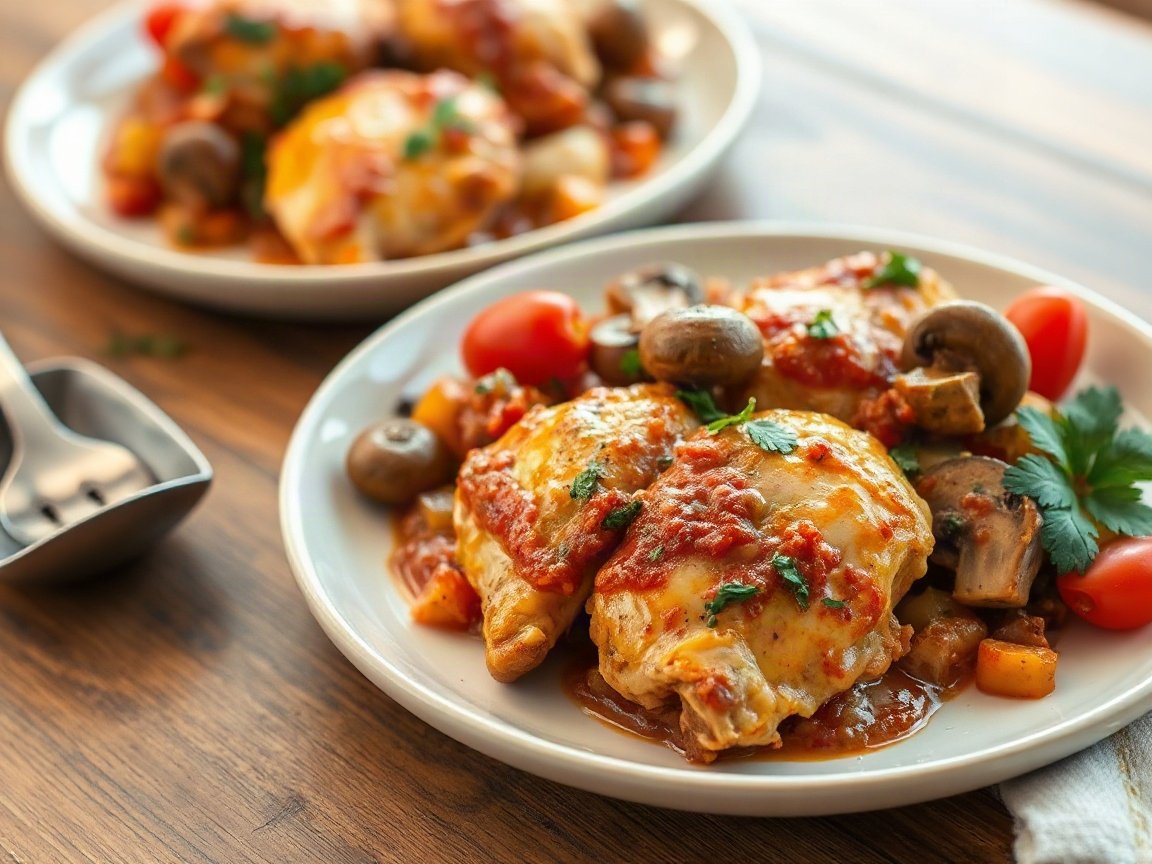
A slow simmer, a rich red sauce and two plates of comfort: this one is made for a quiet evening in.
Frequently asked questions
What does chicken cacciatore mean?
Cacciatore means hunter in Italian, and chicken cacciatore is a hunter-style braise of chicken cooked with tomatoes, peppers, mushrooms and herbs.
Can I make chicken cacciatore without wine?
Yes. This recipe uses chicken broth instead, and the tomato paste, tomatoes and oregano give the sauce plenty of depth.
What do you serve with chicken cacciatore?
Polenta, pasta and mashed potatoes are all good choices, because they catch the sauce. Crusty bread and a green salad make good sides.
Can I use boneless chicken breasts?
You can, but bone-in thighs stay more tender in a braise. If you use breasts, cook them only until they reach 165°F so they do not dry out.
Print
Chicken Cacciatore for Two
- Total Time: 1 hour 10 minutes
- Yield: 2 servings
Description
Chicken cacciatore for two: four bone-in chicken thighs braised with peppers, mushrooms and tomatoes in one skillet, with a thick, rustic sauce.
Ingredients
- 4 bone-in, skin-on chicken thighs (about 1 1/2 pounds in total)
- 1/2 teaspoon kosher salt
- 1/4 teaspoon ground black pepper
- 1 tablespoon olive oil
- 1/2 medium yellow onion, sliced
- 1/2 red bell pepper, sliced
- 4 ounces cremini mushrooms, sliced
- 2 garlic cloves, minced
- 1/2 teaspoon dried oregano
- 1 tablespoon tomato paste
- 1 (14.5-ounce) can diced tomatoes, with their juices
- 1/2 cup low-sodium chicken broth
- 1 bay leaf
- 1 tablespoon chopped fresh parsley
- cooked pasta, polenta or mashed potatoes, to serve
Instructions
- Pat the chicken thighs dry and season both sides with the salt and pepper.
- Heat the oil in a deep 12-inch skillet or braiser over medium-high heat. Add the thighs skin side down and cook for 6 minutes, until deeply golden. Turn them and cook for 2 minutes more. Move the chicken to a plate and pour off all but about 1 tablespoon of fat.
- Reduce the heat to medium. Add the onion, bell pepper and mushrooms and cook for 5 minutes, stirring, until softened.
- Add the garlic, oregano and tomato paste and cook for 1 minute, stirring, until the paste darkens slightly.
- Stir in the diced tomatoes with their juices, the broth and the bay leaf, scraping up the browned bits from the pan. Bring to a simmer.
- Nestle the chicken back into the sauce, skin side up, and any juices from the plate. Cover, reduce the heat to medium-low and simmer for 25 minutes.
- Uncover and simmer for 10 minutes more, until the sauce thickens and a thermometer in the thickest part of a thigh, away from the bone, reads at least 165°F. Remove the bay leaf, sprinkle with the parsley and serve over pasta, polenta or mashed potatoes.
Notes
Equipment: 12-inch deep skillet or braiser with a lid, tongs, paper towels
- Brown the skin well, since it adds flavor to the sauce and keeps the thighs from tasting plain.
- Nestle the thighs skin side up so the skin stays above the liquid.
- Keep the heat at medium-low during the braise so the sauce simmers gently without scorching.
- Finish uncovered so the sauce thickens into something that clings to the chicken.
- For extra tender meat, let the thighs simmer a few minutes past the minimum temperature.
- Doneness: The chicken is done when a thermometer in the thickest part of a thigh, away from the bone, reads at least 165°F and the meat pulls easily from the bone; the sauce should coat the back of a spoon.
- Refrigerate leftovers in an airtight container within 2 hours and eat within 3 to 4 days; reheat until steaming hot, to 165°F. The flavor deepens overnight.
- Cook chicken to an internal temperature of at least 165°F, refrigerate leftovers within 2 hours and reheat leftovers to 165°F (USDA FSIS).
- Prep Time: 15 minutes
- Cook Time: 55 minutes
- Category: Dinner
- Method: Stovetop
- Cuisine: Italian