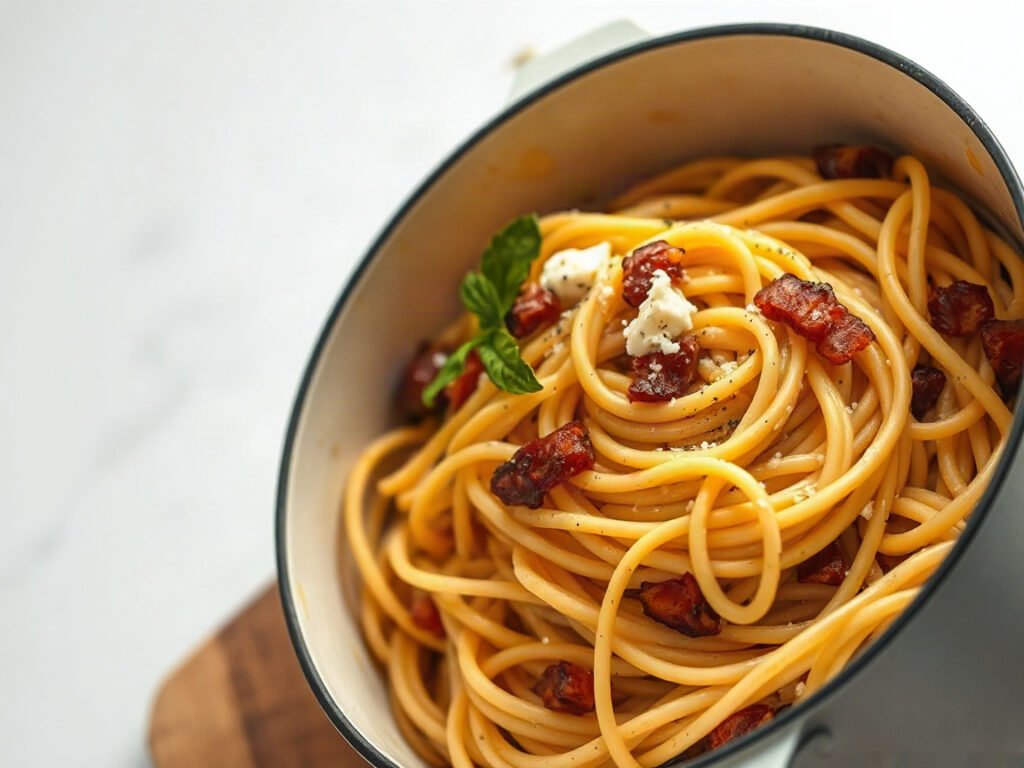
Pasta carbonara is spaghetti tossed with eggs, finely grated cheese, crisp pancetta and plenty of black pepper until everything turns into a glossy, creamy sauce, with no cream at all. This version is made for two, with 6 ounces of spaghetti in one 12-inch skillet, and it is on the table in about 30 minutes. Warming the eggs with hot pasta water first and finishing the sauce over low heat keeps it silky instead of scrambled. It is a simple, cozy pasta dinner for two that tastes far more special than its short ingredient list.
Why you’ll like this carbonara
- Made for two. Two generous bowls from 6 ounces of spaghetti, with no extra sauce to store.
- Creamy without cream. Eggs, cheese and starchy pasta water make the sauce.
- Pantry ingredients. Spaghetti, eggs, a hard cheese, black pepper and a small package of pancetta or bacon.
- Quick. About 10 minutes of prep and 20 minutes of cooking.
- Forgiving method. Tempering the eggs and tossing over low heat give you time to get the texture right.
What pasta carbonara is
Carbonara is a Roman pasta built on a few strong flavors: cured pork, a sharp aged cheese, black pepper and eggs. The pork is rendered until crisp, and its fat becomes part of the sauce. The eggs and cheese are whisked together and tossed with hot pasta, where the heat thickens them into a sauce that clings to every strand. Many restaurant versions in the United States add cream, but the classic method does not need it, and the result is lighter and more flavorful without it.
Many small-batch carbonara recipes are written for one person, often with a whole egg plus a yolk for a single portion. For two, a little more pasta, twice the pork and two eggs plus one extra yolk make a sauce that coats both bowls generously without turning heavy.
What makes the sauce silky
Tempering the eggs. Whisking half a cup of hot pasta water into the egg mixture warms it gently before it meets the pan. Warm eggs thicken smoothly; cold eggs hitting hot pasta are the ones that scramble.
Low heat for the finish. The pasta goes back into the skillet over low heat, and you toss constantly for 1 to 2 minutes. That brief, gentle heat thickens the sauce while you watch, and you can lift the pan off the burner at any moment.
Starchy pasta water. Cooking the spaghetti in a medium pot rather than a huge one keeps the water starchier. That starch helps the egg, cheese and fat come together into a creamy sauce, and a splash loosens it if it thickens too much.
Slightly underdone pasta. Pulling the spaghetti about 1 minute before the package says leaves it just firm, so it finishes cooking in the sauce instead of turning soft.
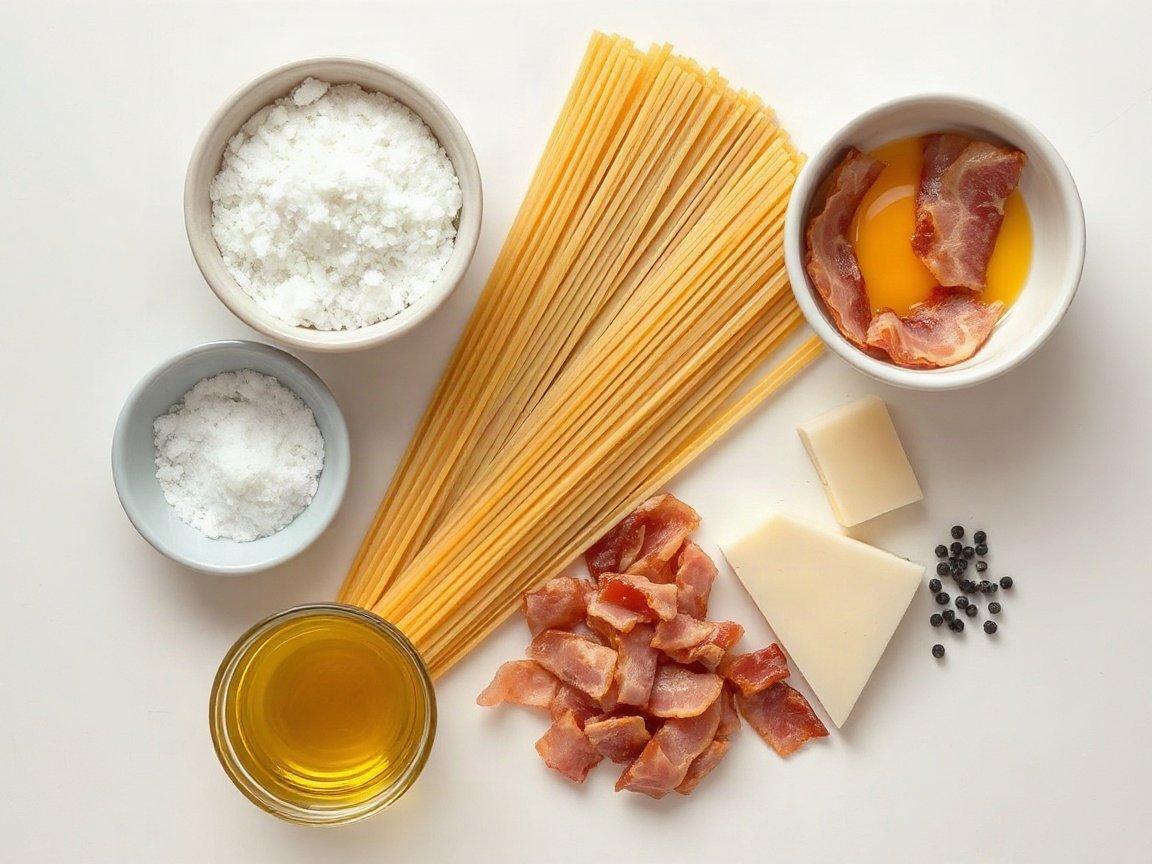
Ingredients for pasta carbonara for two
The exact amounts are in the recipe card below. These notes cover the choices that matter.
- Spaghetti: 6 ounces, about a third of a standard box. Bucatini, linguine or rigatoni also hold the sauce well.
- Pancetta or thick-cut bacon: 4 ounces, diced. Pancetta is cured but not smoked and tastes closest to traditional carbonara; bacon adds a smoky flavor. Guanciale, cured pork cheek, is the traditional choice if you can find it.
- Eggs and an extra yolk: two large eggs plus one yolk give a rich, golden sauce. Let them sit out while the water heats so they are not fridge-cold.
- Parmesan or Pecorino Romano: grate it finely so it melts into the sauce instead of clumping. Pecorino Romano is saltier and sharper; Parmesan is milder and nutty. A mix of both is lovely.
- Black pepper: freshly ground and generous. It is one of the defining flavors of the dish.
- Kosher salt: for the pasta water only. The pork and cheese bring plenty of salt to the sauce.
How to make pasta carbonara
- Bring a medium pot of salted water to a boil.
- Whisk the eggs, yolk, cheese and pepper in a large heatproof bowl.
- Crisp the pancetta in a 12-inch skillet over medium heat for about 6 minutes, then turn off the heat.
- Cook the spaghetti just short of al dente and save a cup of pasta water.
- Whisk half a cup of the hot pasta water into the egg mixture.
- Toss the pasta and egg mixture in the skillet over low heat for 1 to 2 minutes, until creamy.
- Serve right away with more cheese and pepper.
Doneness and egg safety
The right texture. The sauce is ready when it looks glossy and creamy, coats each strand of spaghetti and pools just slightly in the pan. It thickens more as it sits, so stop when it still looks a little loose. If you see small curds forming, lift the pan off the heat and keep tossing; the residual heat is enough.
About the eggs. In a classic carbonara, the eggs are cooked gently by the hot pasta and a minute or two over low heat, which gives that soft, custardy sauce. If you prefer the eggs fully cooked, keep tossing over low heat until an instant-read thermometer in the sauce reads 160°F, the USDA temperature for cooked egg dishes. If you are cooking for someone who is pregnant, a young child, an older adult or anyone with a weakened immune system, use pasteurized eggs, which are sold in cartons and shells at many grocery stores.
Tips for the best carbonara
- Grate the cheese finely. A microplane or the small holes of a box grater gives cheese that melts smoothly into the sauce.
- Keep the pork fat. Leave the rendered fat in the skillet; it carries the pork flavor through the sauce.
- Have everything ready. The final toss takes only a minute or two, so whisk the eggs and set out the tongs before the pasta is done.
- Save more water than you need. A full cup of pasta water means you can always loosen the sauce.
- Warm the bowls. Carbonara cools quickly, so rinse your bowls with hot water or set them near the stove before serving.
Substitutions and variations
Bacon instead of pancetta: thick-cut bacon works in the same amount and adds a smoky note.
Turkey bacon: it works too, but it renders very little fat, so add another teaspoon of olive oil to the skillet.
Guanciale: the traditional Roman choice; use it in the same amount and expect a little more fat.
Cheese: all Parmesan, all Pecorino Romano or a mix. With Pecorino, taste before adding any extra salt.
Pasta shape: bucatini, linguine and rigatoni all hold the sauce; cook them just short of al dente in the same way.
What to serve with it
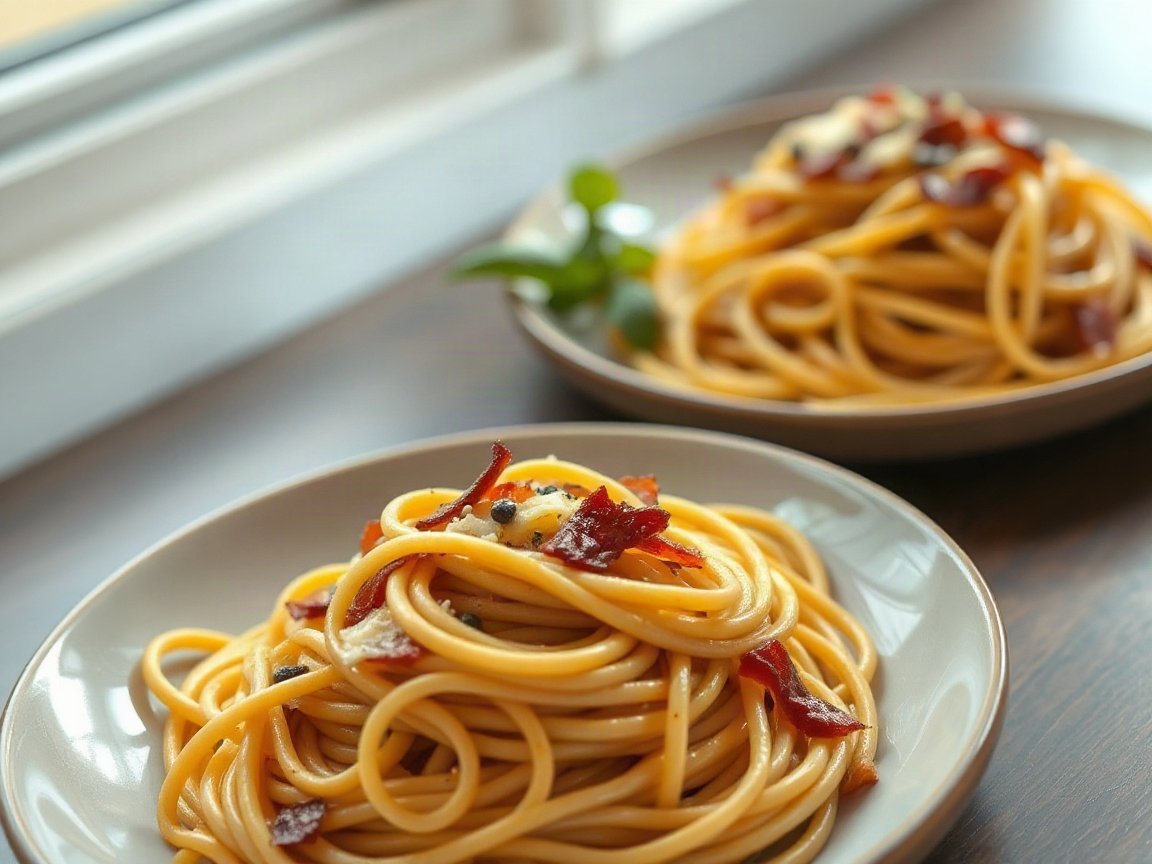
Carbonara is rich, so a bright, simple side balances it best. A green salad with lemon and olive oil, arugula with shaved Parmesan, or roasted broccoli or green beans all work well. Crusty bread is nice for the last of the sauce. It is the kind of dinner that feels like a little night out at home, best enjoyed the moment it leaves the pan.
Storage and reheating
Carbonara is at its best right away, and two portions rarely leave leftovers. If you do have some, refrigerate it in an airtight container within two hours and eat it within 3 to 4 days.
To reheat, warm it gently in a skillet over low heat with a splash of water, tossing until hot all the way through (165°F). The sauce will not be quite as creamy as when it was fresh, but the flavor holds up well.
Crisp the pancetta, whisk the eggs and cheese, and in about 30 minutes you have two bowls of silky pasta carbonara. Grind over a little more pepper and enjoy it while it is hot.
Frequently asked questions
How do I keep the eggs from scrambling?
Warm the egg mixture with hot pasta water first, then toss it with the pasta over low heat and keep everything moving. If you see curds, lift the pan off the heat and keep tossing.
Does carbonara have cream?
The classic version does not. The creamy texture comes from eggs, finely grated cheese, rendered pork fat and starchy pasta water.
Can I make carbonara without pork?
Turkey bacon works with an extra teaspoon of olive oil. The egg and cheese sauce method stays the same.
Is carbonara safe to eat with eggs that are not fully cooked?
For fully cooked eggs, toss over low heat until the sauce reaches 160°F. For anyone who is pregnant, very young, older or has a weakened immune system, use pasteurized eggs.
Print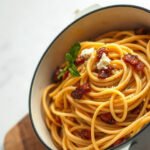
Pasta Carbonara for Two
- Total Time: 30 minutes
- Yield: 2 servings
Description
Classic carbonara for two: spaghetti tossed with eggs, an extra yolk, Parmesan or Pecorino, crisp pancetta and black pepper into a silky sauce with no cream.
Ingredients
- 1 tablespoon kosher salt, for the pasta water
- 6 ounces spaghetti
- 4 ounces pancetta or thick-cut bacon, diced
- 1 teaspoon olive oil
- 2 large eggs, at room temperature
- 1 large egg yolk
- 3/4 cup finely grated Parmesan or Pecorino Romano, plus more for serving
- 1/2 teaspoon freshly ground black pepper, plus more for serving
Instructions
- Bring a medium pot of water to a boil and add the salt.
- In a large heatproof bowl, whisk the eggs, egg yolk, 3/4 cup of cheese and the pepper until smooth.
- Put the pancetta and olive oil in a 12-inch skillet over medium heat. Cook, stirring now and then, for about 6 minutes, until the fat has rendered and the pancetta is golden and crisp. Turn off the heat and leave the pancetta and fat in the pan.
- Cook the spaghetti about 1 minute less than the package directions, so it is just short of al dente. Scoop out 1 cup of the pasta water, then drain the pasta.
- Slowly whisk 1/2 cup of the hot pasta water into the egg mixture to warm it.
- Add the spaghetti to the skillet and set it over low heat. Pour in the egg mixture and toss constantly with tongs for 1 to 2 minutes, until the sauce turns creamy and clings to the pasta. Add more pasta water a splash at a time if it looks thick. For fully cooked eggs, keep tossing over low heat until the sauce reads 160°F.
- Take the pan off the heat and serve right away, topped with more cheese and pepper.
Notes
Equipment: medium pot, 12-inch skillet, large heatproof bowl, whisk, tongs, instant-read thermometer (optional)
- Keep the heat low once the eggs go in; if you see small curds, lift the pan off the heat and keep tossing.
- The sauce thickens as it sits, so loosen it with pasta water and serve at once.
- Guanciale is the traditional choice if you can find it; use it in the same amount.
- Pecorino Romano is saltier and sharper than Parmesan; taste before adding extra salt.
- Turkey bacon works in place of pancetta; add another teaspoon of olive oil because it renders little fat.
- Carbonara is best eaten right away. Refrigerate leftovers in an airtight container and eat them within 3 to 4 days.
- Reheat gently in a skillet over low heat with a splash of water, tossing, until hot (165°F); the sauce will be less creamy.
- Eggs are fully cooked at 160°F (USDA FSIS). If you are serving anyone who is pregnant, a young child, an older adult or someone with a weakened immune system, use pasteurized eggs (FoodSafety.gov).
- Refrigerate leftovers within 2 hours (USDA FSIS).
- Prep Time: 10 minutes
- Cook Time: 20 minutes
- Category: Dinner
- Method: Stovetop
- Cuisine: Italian