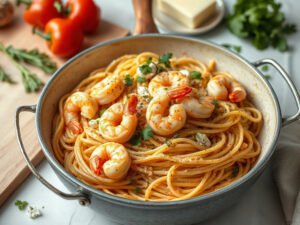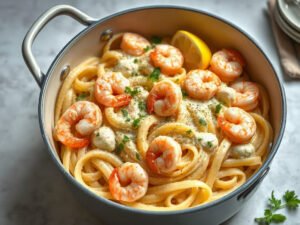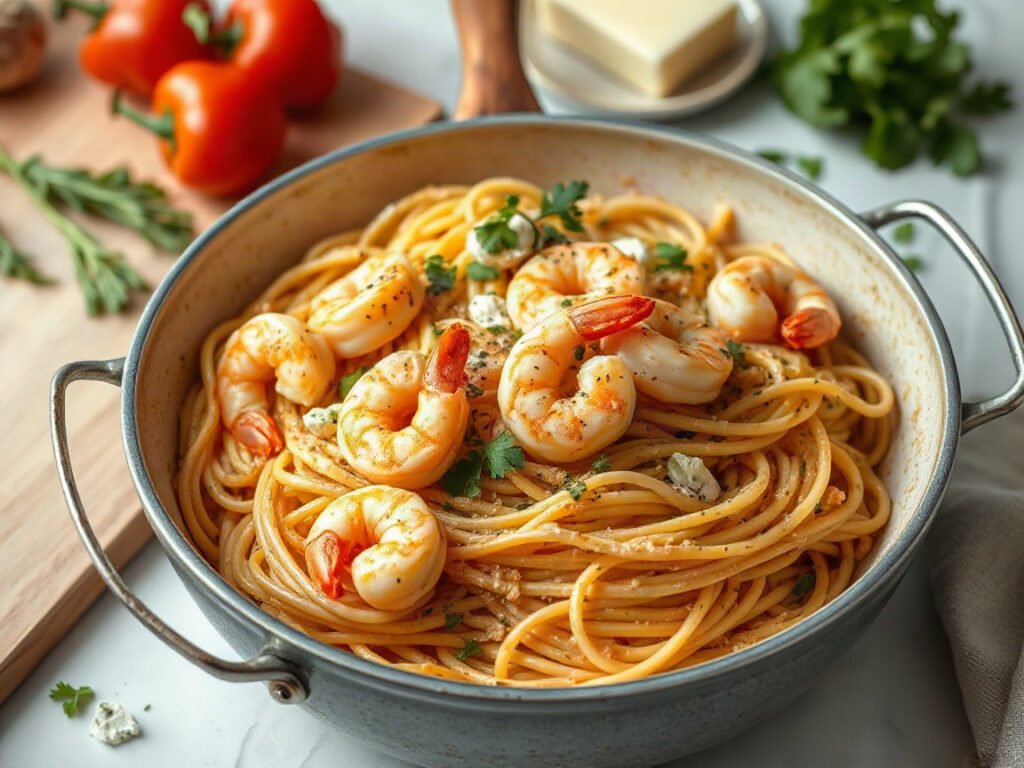
This garlic shrimp pasta is spaghetti tossed with tender, paprika-dusted shrimp in a glossy sauce of garlic, broth, butter and Pecorino. It makes two plates in about 30 minutes, so it is an easy shrimp pasta for a weeknight that still feels like a treat. The key is simple: the shrimp sear quickly and wait on a plate while the sauce reduces, then go back in at the very end so they stay plump and juicy. I built it around a short list of pantry ingredients, so all you need to pick up is the shrimp.
Why you’ll like this shrimp pasta
- Made for two: 8 ounces of shrimp and 4 ounces of pasta give two satisfying plates with nothing left to reheat.
- Ready in 30 minutes: the sauce comes together while the pasta boils.
- One skillet for the sauce: garlic, shrimp and sauce all cook in a single 10-inch pan.
- Pantry sauce: broth, lemon, butter, garlic and grated cheese, no cream required.
- Tender shrimp: they cook only a few minutes and finish in the warm sauce.
What makes it work
Shrimp out, sauce in. Shrimp turn rubbery when they sit in a simmering pan. Searing them for a minute or two per side, then moving them to a plate while the broth reduces, keeps them tender. They warm through again when they go back in with the pasta.
A small pan for a small batch. A 10-inch skillet holds 8 ounces of shrimp in one layer, so they sear instead of steaming. It also keeps half a cup of broth from evaporating before it turns into sauce.
Starchy pasta water. A splash of the water the pasta cooked in, plus butter and Pecorino, turns the reduced broth into a silky sauce that clings to every strand. Finishing the pasta in the pan for the last minute lets it soak up flavor.
Lemon for brightness. A little fresh lemon juice in the broth gives the sauce a clean, bright edge that balances the butter and cheese.
Easy shopping for two. Shrimp is often sold in one-pound bags, and this recipe uses half of one. Keep the rest frozen for another night, or thaw the whole bag and use the second half within a day or two in a salad or tacos. Spaghetti keeps for months, so the pantry side is easy too.
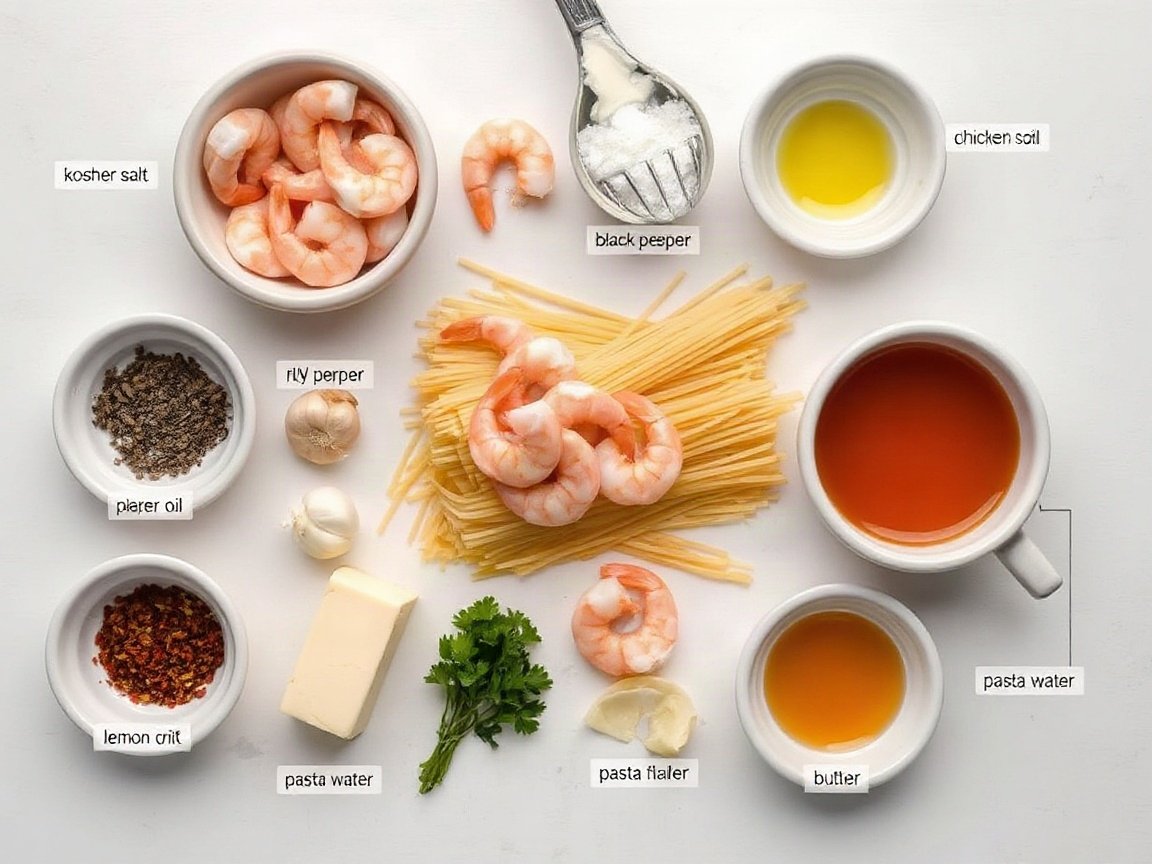
Shrimp pasta ingredients
Exact amounts are in the recipe card below. Here is what each ingredient does and what to look for:
- Large raw shrimp: buy them peeled and deveined to save time. Large shrimp stay juicy and are easy to cook evenly. Tails on or off is your choice; tails off is easier to eat with pasta.
- Spaghetti or linguine: long pasta catches the sauce. Short pasta such as penne also works.
- Garlic: thin slices turn sweet and mellow in the oil and stay visible in the finished dish.
- Paprika and red pepper flakes: sweet paprika gives the shrimp color and gentle warmth; the flakes add mild heat. Use less of the flakes if you prefer it milder.
- Low-sodium chicken broth: the base of the pan sauce. Low-sodium lets you control the salt, since the cheese and pasta water add some.
- Butter and Pecorino Romano: they make the sauce rich and glossy. Pecorino is sharp and salty; Parmesan is a milder swap.
- Fresh lemon and parsley: they keep the dish fresh. Bottled lemon juice works in a pinch, but fresh tastes brighter.
How to make garlic shrimp pasta
- Cook the pasta in salted water until 1 minute short of the package time, saving some cooking water.
- Season the shrimp with paprika, salt and pepper.
- Warm the garlic and red pepper flakes in olive oil for 1 to 2 minutes.
- Sear the shrimp for 1 to 2 minutes per side and set them aside.
- Simmer the broth and lemon juice for 2 minutes.
- Toss in the pasta, butter, Pecorino and pasta water, then return the shrimp with the parsley.
Cues for each step
The garlic: keep the heat at medium and stir. You want pale golden slices that smell sweet. If they turn brown, they taste bitter, so pull the pan off the heat for a moment if they are coloring too quickly.
The shrimp: pat them very dry first so they sear. They are done when they turn pink and opaque all the way through and curl into a loose C shape. A tight O shape means they have gone a little too far, so err on the side of moving them to the plate early; they warm back up in the sauce.
The sauce: after 2 minutes of simmering, the broth should be reduced by about half. When you add the pasta, butter and cheese, toss constantly and add pasta water a splash at a time. The sauce is ready when it looks glossy and coats the pasta without a watery pool in the bottom of the pan.
Tips for the best shrimp pasta
- Salt the pasta water well. It seasons the pasta from the inside and makes the reserved water a better sauce base.
- Have everything ready before the shrimp go in. The skillet part moves fast, so slice the garlic, measure the broth and grate the cheese first.
- Time the pasta with the sauce. Start the garlic when the pasta has a few minutes left, so the pasta is ready just as the broth has reduced.
- Taste before serving. Add a squeeze of lemon or a pinch of salt at the end if it needs it.
Swaps
- Frozen shrimp: thaw them overnight in the refrigerator or in a bowl of cold water, then pat them very dry before seasoning.
- Parmesan instead of Pecorino: milder and less salty, so you may want a pinch more salt.
- Short pasta: penne or another short shape works; cook it the same way, 1 minute short of the package time.
What to serve with it
Garlic shrimp pasta is a complete dinner, but a few simple sides round it out. A green salad with a lemony dressing keeps things light, and roasted broccoli or green beans go well with the garlic and lemon. Warm bread is handy for the last bit of sauce. Set the lemon wedges and extra cheese on the table so each of you can finish your plate to taste.
It is the kind of quick dinner that still feels a little special when you sit down to it together.
Storing and reheating
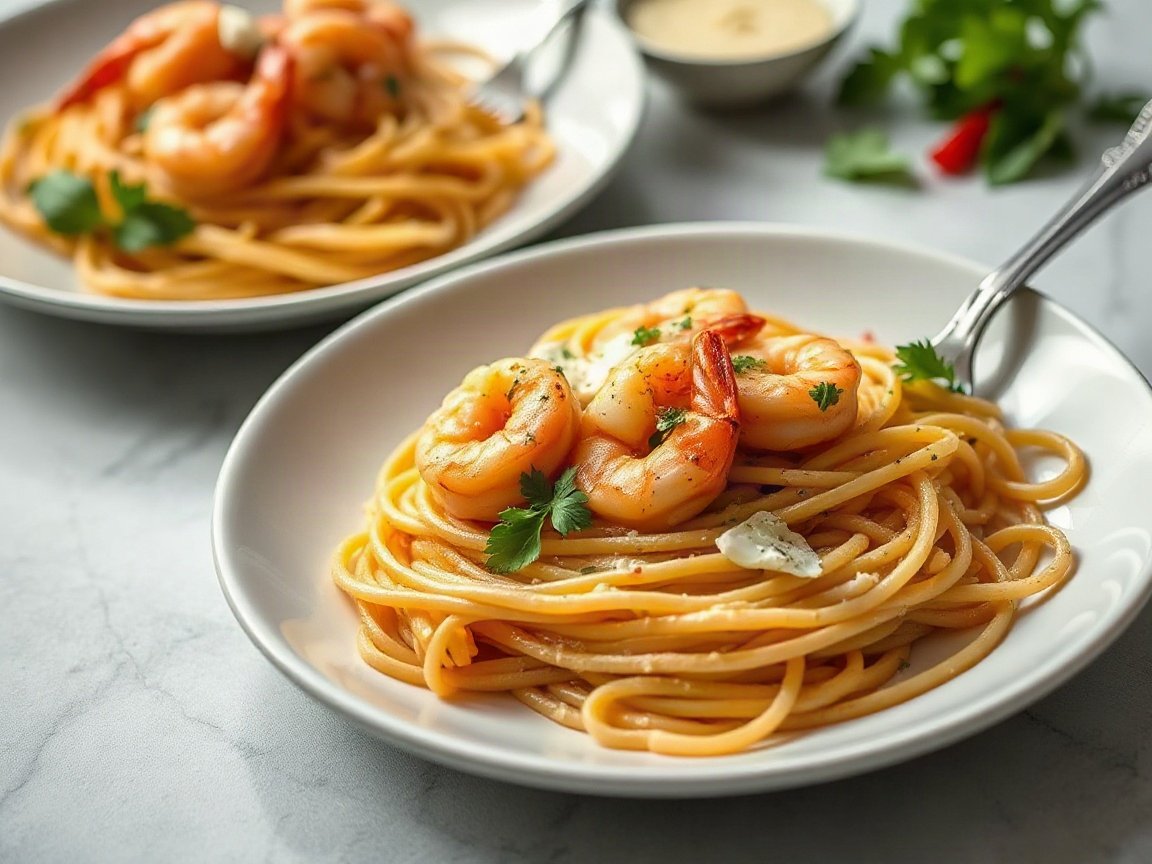
Shrimp pasta is best right away, but leftovers keep. Refrigerate them within two hours of cooking in a covered container and eat them within 3 days. Reheat gently in a skillet with a splash of water or broth, stirring until hot; high heat makes the shrimp tough.
With a bag of shrimp in the freezer and a box of spaghetti in the pantry, a garlicky, buttery dinner for two is never more than half an hour away. Put the water on and enjoy it.
Frequently asked questions
How do I keep shrimp from getting rubbery?
Cook them just until pink and opaque, about 1 to 2 minutes per side, and take them out of the pan while the sauce reduces. They finish warming in the sauce at the end without overcooking.
Should I use raw or cooked shrimp?
Raw shrimp work best because they absorb the garlic and paprika as they cook and stay tender. Precooked shrimp toughen easily, so if you use them, skip the searing and just warm them in the finished sauce.
What pasta is best with shrimp?
Long pasta such as spaghetti or linguine is classic because the glossy sauce clings to it. Penne and other short shapes work too.
Can I make it without the red pepper flakes?
Yes. Leave them out for a mild version; the paprika still gives the shrimp a warm color and gentle flavor. You can pass the flakes at the table for anyone who wants heat.
Print
Garlic Shrimp Pasta for Two
- Total Time: 30 minutes
- Yield: 2 servings
Description
Garlic shrimp pasta for two: paprika-seasoned shrimp and spaghetti tossed in a glossy garlic, broth, butter and Pecorino sauce.
Ingredients
- 1/2 teaspoon kosher salt, plus more for the pasta water
- 4 ounces spaghetti or linguine
- 8 ounces large raw shrimp, peeled and deveined
- 1/2 teaspoon paprika
- Freshly ground black pepper
- 2 tablespoons olive oil
- 3 garlic cloves, thinly sliced
- 1/4 teaspoon red pepper flakes
- 1/2 cup low-sodium chicken broth
- 2 teaspoons fresh lemon juice, plus lemon wedges for serving
- 1 tablespoon unsalted butter
- 2 tablespoons grated Pecorino Romano, plus more for serving
- 2 tablespoons chopped fresh parsley
- Reserved pasta water (about 1/2 cup)
Instructions
- Bring a large pot of well-salted water to a boil. Cook the pasta until 1 minute short of the package time. Scoop out about 1/2 cup of the cooking water, then drain the pasta.
- While the water heats, pat the shrimp dry and toss with the paprika, the 1/2 teaspoon salt and a few grinds of pepper.
- Heat the oil in a 10-inch skillet over medium heat. Add the garlic and red pepper flakes and cook for 1 to 2 minutes, stirring, until the garlic is pale golden.
- Raise the heat to medium-high and add the shrimp in one layer. Cook for 1 to 2 minutes per side, until pink and opaque. Move the shrimp to a plate, leaving the garlic in the pan.
- Pour in the broth and lemon juice and simmer for 2 minutes, until reduced by about half.
- Add the drained pasta, butter, Pecorino and a splash of pasta water. Toss for about 1 minute, adding more pasta water as needed, until the sauce turns glossy and coats the pasta. Return the shrimp and any juices, add the parsley and toss. Serve with lemon wedges and more Pecorino.
Notes
Equipment: large pot, 10-inch skillet, tongs, colander or spider, liquid measuring cup
- Frozen shrimp work; thaw them overnight in the refrigerator or in a bowl of cold water, then pat them very dry.
- Parmesan can replace the Pecorino; it is milder and less salty.
- Penne or another short pasta can replace the spaghetti.
- Refrigerate leftovers in a covered container for up to 3 days.
- Reheat gently in a skillet with a splash of water or broth until hot; high heat makes the shrimp tough.
- Cook shrimp until the flesh is pearly and opaque (FoodSafety.gov).
- Refrigerate leftovers within 2 hours of cooking (FoodSafety.gov).
- Prep Time: 10 minutes
- Cook Time: 20 minutes
- Category: Dinner
- Method: Stovetop
- Cuisine: Italian-American