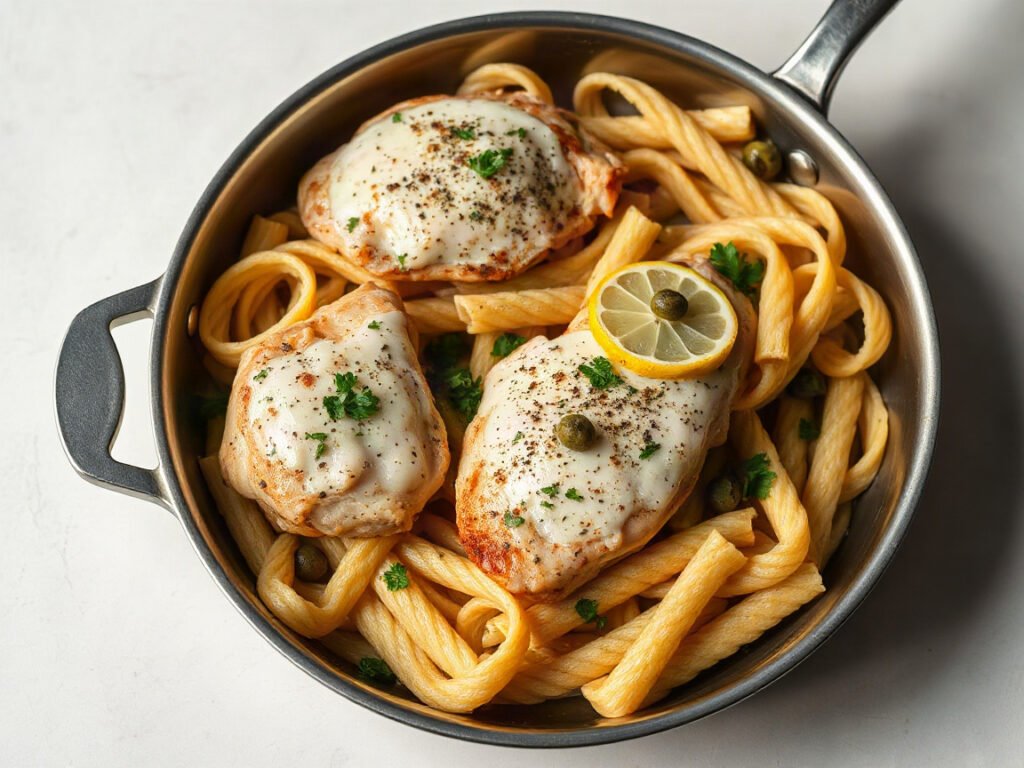
Chicken piccata is one of the quickest ways to make a weeknight dinner feel special. Thin chicken cutlets get a light flour coating and a golden sear, then they simmer briefly in a pan sauce of lemon, capers and white wine, finished with a few cubes of cold butter that turn it glossy. It is bright, tangy and savory all at once, and it takes about 35 minutes. This version is sized for two, with 12 ounces of chicken cut into two cutlets and just enough sauce to coat them. There is no cream to curdle and no big pan to scrub: one skillet, one plate and dinner is done.
Why you’ll like it
- Made for two: one large breast, halved into two cutlets, makes a generous portion for each person.
- One skillet: the chicken browns in the pan and the sauce is built right on top of the browned bits.
- Bright and fresh: lemon and capers cut through the richness of the butter.
- Quick: pounded cutlets cook in a few minutes, and the sauce takes about 5.
- No cream needed: the sauce gets its body from a touch of flour and a swirl of cold butter.
What makes it work
Thin, even cutlets. Cutting the breast in half horizontally and pounding the pieces to an even 1/2 inch means they cook quickly and uniformly. Thin chicken dries out fast, so even thickness matters, because it keeps every part of the cutlet done at the same moment.
A light flour coat. A quick dredge helps the chicken brown and leaves a bit of starch in the pan, which gives the sauce a little body. Shake off the extra so the coating stays thin.
A pan sauce built on the browned bits. After the chicken comes out, the garlic, flour, wine and broth dissolve the browned bits stuck to the pan. That is where much of the flavor comes from.
Cold butter off the heat. Whisking cold butter into the sauce away from the heat melts it slowly, so the sauce turns glossy and creamy rather than greasy or split.
Plenty of fresh lemon. Flat-tasting sauce is a common complaint with piccata. Fresh lemon juice and a little zest, added at the very end, keep the flavor bright.
How it’s sized for two
A typical chicken piccata recipe uses four chicken breasts, a half cup of flour and a cup of broth. Cut in half, that gives 12 ounces of chicken, 1/4 cup of flour for dredging, 1/2 cup of broth and 1/4 cup of wine, which is just enough sauce to coat two cutlets without drowning them.
A 10-inch skillet is the right size. Two cutlets fit side by side to brown, and the small amount of sauce reduces quickly at the proper depth. A larger pan would spread the sauce too thin.
Because this is a fast recipe, it helps to have everything measured before you start: the capers drained, the lemon juiced, the butter cubed and chilled and the parsley chopped.
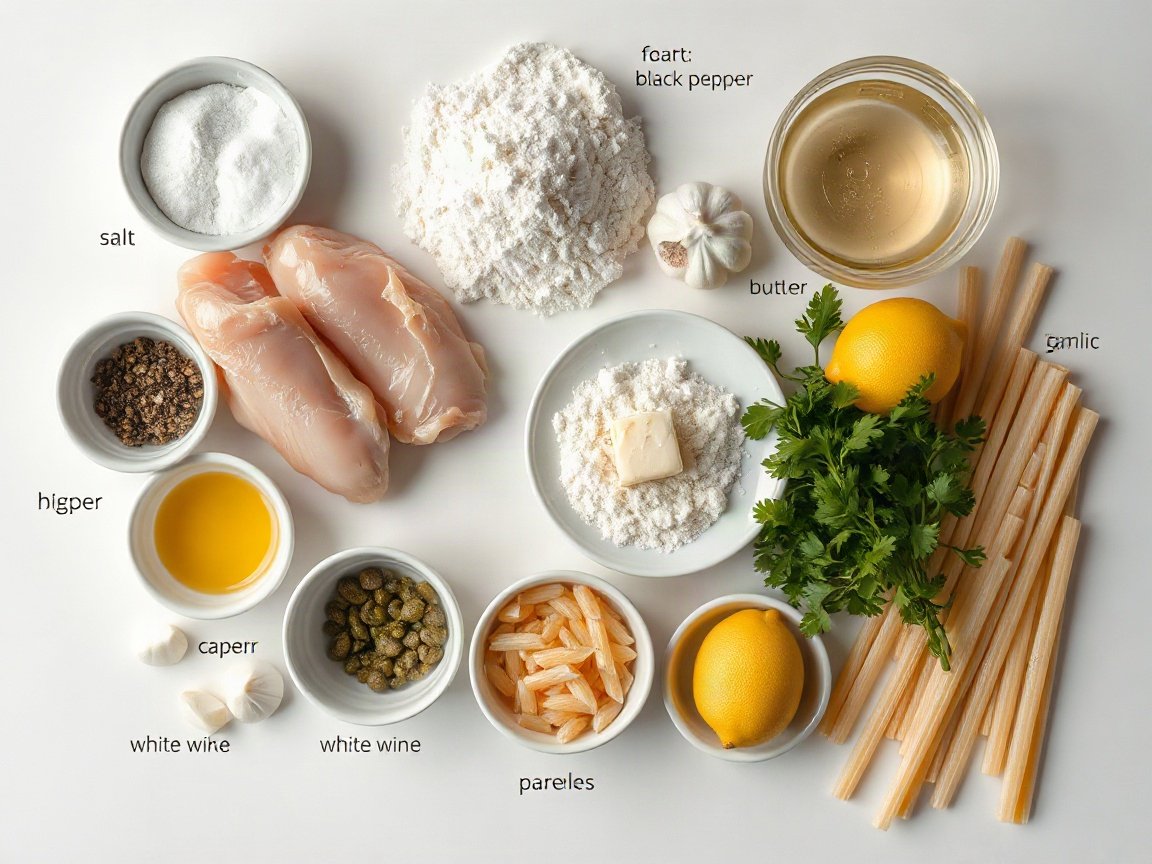
Ingredients for chicken piccata
Exact amounts are in the recipe card below. Here is how to choose each one.
- Chicken breast: boneless and skinless. Cut it horizontally into two cutlets and pound them thin.
- Flour: plain all-purpose flour for dredging, plus a small amount to lightly thicken the sauce.
- Olive oil and butter: oil for browning, and butter in two forms: a little for the sauce base and cold cubes to finish.
- Garlic: one clove, minced, for gentle savory depth.
- Dry white wine: a crisp, dry white you would drink, such as pinot grigio or sauvignon blanc. Chicken broth alone can stand in.
- Chicken broth: low-sodium so the capers do not make it too salty.
- Capers: drained, and rinsed if you want a milder brine flavor.
- Lemon: fresh juice and zest. Bottled juice tastes flat and sharp.
- Parsley: a little fresh chopped for color.
How to make chicken piccata
- Pound the cutlets, season them and dredge them in flour.
- Brown the chicken in olive oil and set it aside.
- Cook the garlic and flour in butter, then add the wine.
- Simmer the broth and capers until the sauce reduces by about half.
- Off the heat, whisk in cold butter, lemon juice and zest.
- Return the chicken, warm it through, add parsley and serve.
Step-by-step notes
Pounding and dredging. Pound the chicken between sheets of plastic wrap until it is an even 1/2 inch thick. Season it, press it into the flour on both sides and shake off the excess.
Browning. Cook the cutlets for 2 to 3 minutes per side in hot olive oil, until golden. They will finish in the sauce, so do not overcook them now.
Starting the sauce. Lower the heat, add a spoonful of butter and the garlic for 30 seconds, then whisk in the flour for 30 seconds so it loses its raw taste. Pour in the wine and simmer for 2 minutes, scraping the bottom of the pan.
Reducing. Add the broth and capers and simmer for 3 to 4 minutes. The sauce is ready when it has reduced by about half and lightly coats a spoon.
Finishing. Take the pan off the heat and whisk in the cold butter one cube at a time, then the lemon juice and zest. Taste. It should be bright, buttery and a little salty from the capers.
Returning the chicken. Nestle the cutlets back into the sauce for about a minute and spoon sauce over the top. Check that the chicken has reached 165°F, then finish with parsley.
Tips and variations
- Do not overcook the chicken. Thin cutlets go from juicy to dry in a minute or two, so use a thermometer.
- Use fresh lemon. Bottled juice cannot give the same bright flavor.
- Add the butter cold, off the heat. This keeps the sauce glossy rather than oily.
- Skip the wine. Replace it with extra chicken broth; the sauce will be milder.
- Make it creamy. A splash of heavy cream added to the sauce before the chicken goes back makes a richer version, but it is not needed.
- Try tender cutlets. Chicken tenderloins pounded thin also work.
What to serve with it
The lemony sauce pairs well with simple, mild sides.
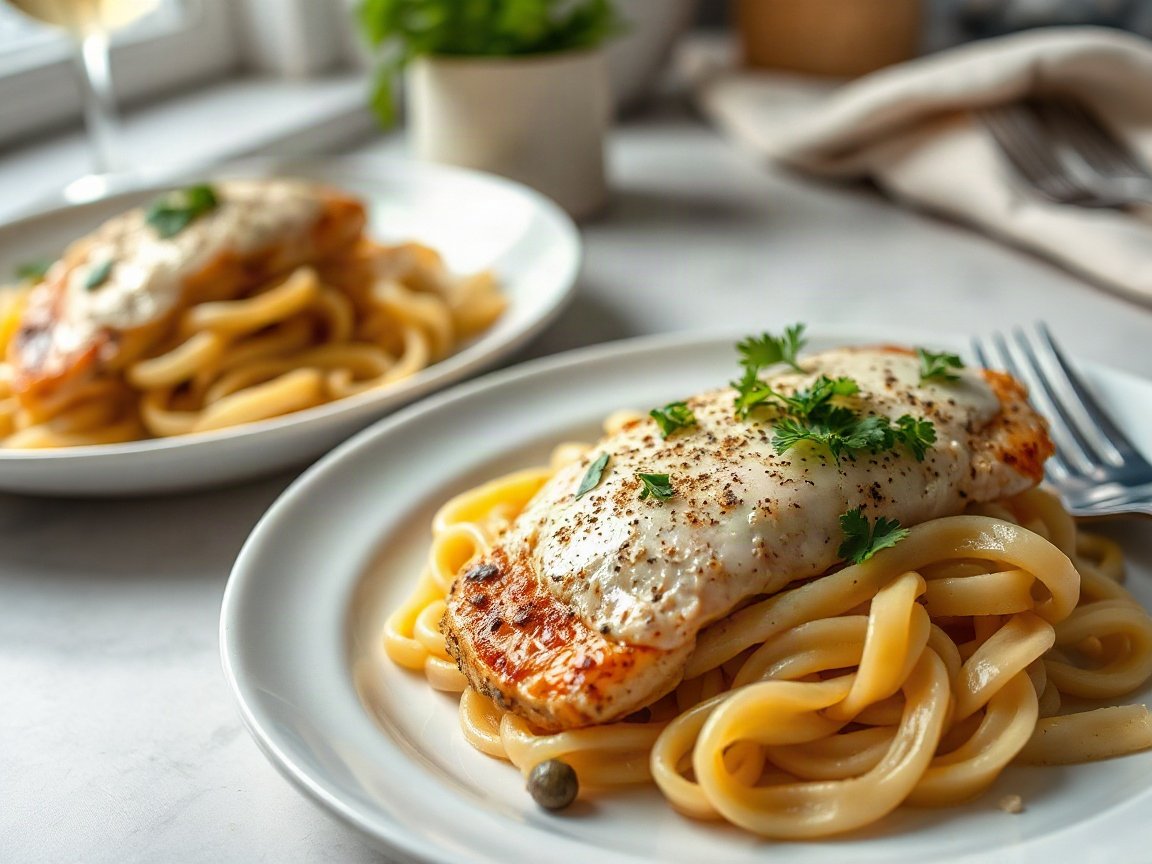
- Angel hair or linguine tossed with a little of the sauce.
- Mashed potatoes to soak it up.
- Steamed green beans, asparagus or broccoli for a fresh vegetable.
- Crusty bread for the last of the sauce.
For another cozy chicken dinner made in one pot, try our one pot chicken and rice for two.
Storage and leftover capers
The sauce is best fresh, but leftovers keep. Refrigerate the chicken and sauce within 2 hours and eat within 3 to 4 days. Reheat gently on the stove until hot throughout, to 165°F. Freezing is not recommended, since the buttery sauce can separate.
The recipe uses only a spoonful or so of capers. Keep the rest of the jar tightly closed with the capers covered in their brine in the refrigerator, and use them in salads, pasta or on toast with smoked fish.
Lemon, butter and a little brine: it does not take much to make a quiet dinner feel like a night out.
Frequently asked questions
What is the best chicken piccata recipe?
The best chicken piccata has thin, evenly cooked cutlets, a sauce with plenty of fresh lemon and capers, and a glossy butter finish. This version for two follows that formula in one skillet.
What should I serve with chicken piccata?
Angel hair pasta, mashed potatoes or crusty bread soak up the sauce, and green vegetables such as asparagus or green beans add freshness.
Can I make chicken piccata without wine?
Yes. Use extra chicken broth in place of the wine. The sauce will be a little milder, so add lemon juice to taste at the end.
Does chicken piccata have cream?
The classic version does not. This recipe gets its body from a little flour and cold butter. Some versions add cream, which makes the sauce richer.
How is chicken piccata different from chicken Milanese?
Both use thin cutlets. Milanese is breaded and fried and usually served with a simple topping, while piccata is lightly floured and served in a lemon and caper sauce.
Print
Chicken Piccata for Two
- Total Time: 35 minutes
- Yield: 2 servings
Description
Chicken piccata for two: golden chicken cutlets in a lemon, caper and white wine butter sauce, made in one skillet.
Ingredients
- 12 ounces boneless, skinless chicken breast, halved horizontally into 2 cutlets
- 1/4 teaspoon salt
- 1/4 teaspoon black pepper
- 1/4 cup all-purpose flour, plus 2 teaspoons for the sauce
- 2 tablespoons olive oil
- 3 tablespoons unsalted butter: 1 tablespoon for the sauce and 2 tablespoons cold and cubed to finish
- 1 garlic clove, minced
- 1/4 cup dry white wine
- 1/2 cup chicken broth
- 1 1/2 tablespoons capers, drained
- 1 tablespoon fresh lemon juice and 1/2 teaspoon lemon zest
- 1 tablespoon chopped fresh parsley
- angel hair pasta or mashed potatoes, to serve (optional)
Instructions
- Pound the cutlets between two sheets of plastic wrap to an even 1/2 inch. Season with the salt and pepper, then dredge in the 1/4 cup flour, shaking off the excess.
- Heat the olive oil in a 10-inch skillet over medium-high heat. Brown the chicken for 2 to 3 minutes per side, until golden. Transfer to a plate.
- Reduce the heat to medium. Add 1 tablespoon of the butter and the garlic and cook for 30 seconds. Whisk in the 2 teaspoons flour and cook for 30 seconds.
- Pour in the wine and simmer for 2 minutes, scraping up the browned bits. Add the broth and capers and simmer for 3 to 4 minutes, until the sauce is reduced by about half.
- Remove the skillet from the heat. Whisk in the 2 tablespoons cold butter, a piece at a time, then the lemon juice and zest.
- Return the chicken and any juices to the skillet and spoon the sauce over it for 1 minute, until the chicken reaches 165°F. Sprinkle with parsley and serve.
Notes
Equipment: 10-inch skillet, meat mallet or rolling pin, whisk, instant-read thermometer
- Pound the cutlets evenly and do not overcook them; thin chicken dries out quickly.
- Use fresh lemon juice, not bottled concentrate.
- Add the cold butter off the heat so the sauce stays glossy instead of splitting.
- Chicken broth alone can replace the wine, though the flavor will be milder.
- The sauce is best made fresh; the chicken can be floured an hour or so ahead.
- Doneness: The chicken is done when an instant-read thermometer reads 165°F; the sauce is ready when it is glossy and lightly thickened and tastes distinctly of lemon.
- Refrigerate leftovers within 2 hours and eat within 3 to 4 days. Reheat gently on the stove to 165°F, spooning the sauce over the chicken; avoid freezing. Keep the rest of the jar of capers in their brine in the refrigerator.
- Cook chicken to an internal temperature of 165°F and refrigerate leftovers within 2 hours (USDA FSIS).
- Prep Time: 15 minutes
- Cook Time: 20 minutes
- Category: Dinner
- Method: Stovetop
- Cuisine: Italian-American