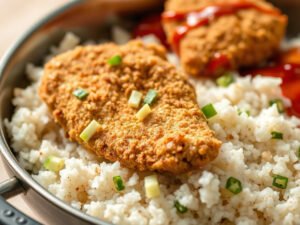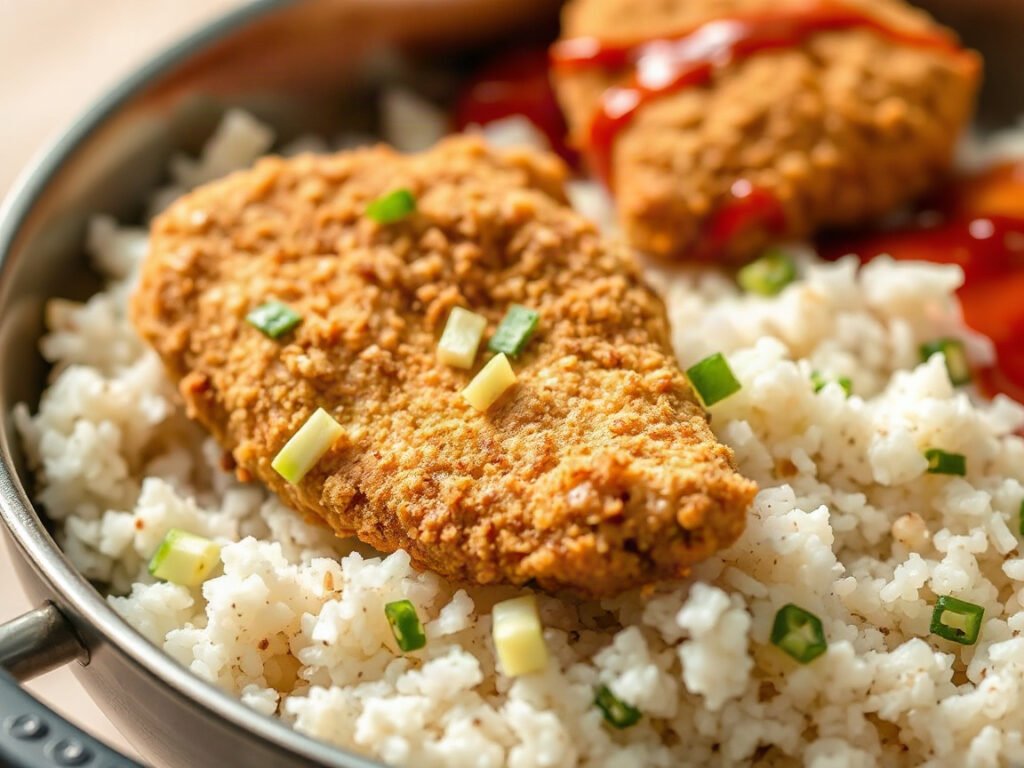
Chicken katsu is a thin chicken cutlet coated in crunchy panko, fried until golden and served sliced with a sweet-tangy katsu sauce. This version is sized for two: one chicken breast becomes two cutlets, fried in a shallow layer of oil in a single skillet, with a sauce you stir together from pantry condiments. Pounding the chicken to an even thickness keeps the meat juicy while the crust browns, and a short rest on a wire rack keeps the crumbs crisp. Served over rice with shredded cabbage, it makes a satisfying dinner in about 35 minutes.
Why you’ll like it
- Crunchy outside, juicy inside: thin cutlets cook fast, so the chicken stays tender under the panko.
- No deep fryer: a skillet and about 1/2 inch of oil are enough.
- Made for two: one breast makes two cutlets, one each.
- A two-minute sauce: ketchup, Worcestershire sauce, soy sauce and sugar make a good katsu sauce.
- A full plate: rice and cabbage turn the cutlets into dinner.
What is chicken katsu?
Chicken katsu is a Japanese-style cutlet: boneless chicken pounded thin, coated in flour, egg and panko breadcrumbs, and fried until crisp. Panko is made from crustless bread and forms larger, airier flakes than ordinary breadcrumbs, which is why katsu has such a light crunch.
It is usually sliced into strips and served with rice, shredded cabbage and a thick, tangy-sweet sauce. You can also tuck it into a sandwich, pile it on a rice bowl or serve it with curry. This version keeps the classic plate simple and focuses on getting the crust and the chicken right.
What makes it work
An even, thin cutlet. Cutting the breast in half and pounding it to 1/2 inch means every part cooks at the same speed. Without this step, the thick end would dry out before the thin end is cooked.
Three-step coating. Flour gives the egg something to cling to, the egg glues on the panko, and pressing the crumbs firmly makes them stay on in the oil.
Oil near 350°F. At that temperature, the panko browns in about 3 minutes per side while the chicken cooks through. Cooler oil soaks into the crumbs and makes the crust heavy.
A rack rest. Resting the cutlets on a wire rack lets steam escape from underneath. A plate would trap it and soften the crust.
A balanced sauce. Ketchup brings sweetness, Worcestershire sauce adds tang and depth, and a little soy sauce and sugar tie it together.
How it’s sized for two
Many katsu recipes make four cutlets, often deep-fried. This one starts with a single large chicken breast, about 12 ounces, cut into two cutlets. You need only 1/3 cup of flour, one egg and 3/4 cup of panko to coat them.
A 10-inch skillet with about 3/4 cup of oil holds both cutlets side by side, so you do not need a deep pot. The sauce makes just enough for two plates, and the rice and cabbage are portioned for two as well.
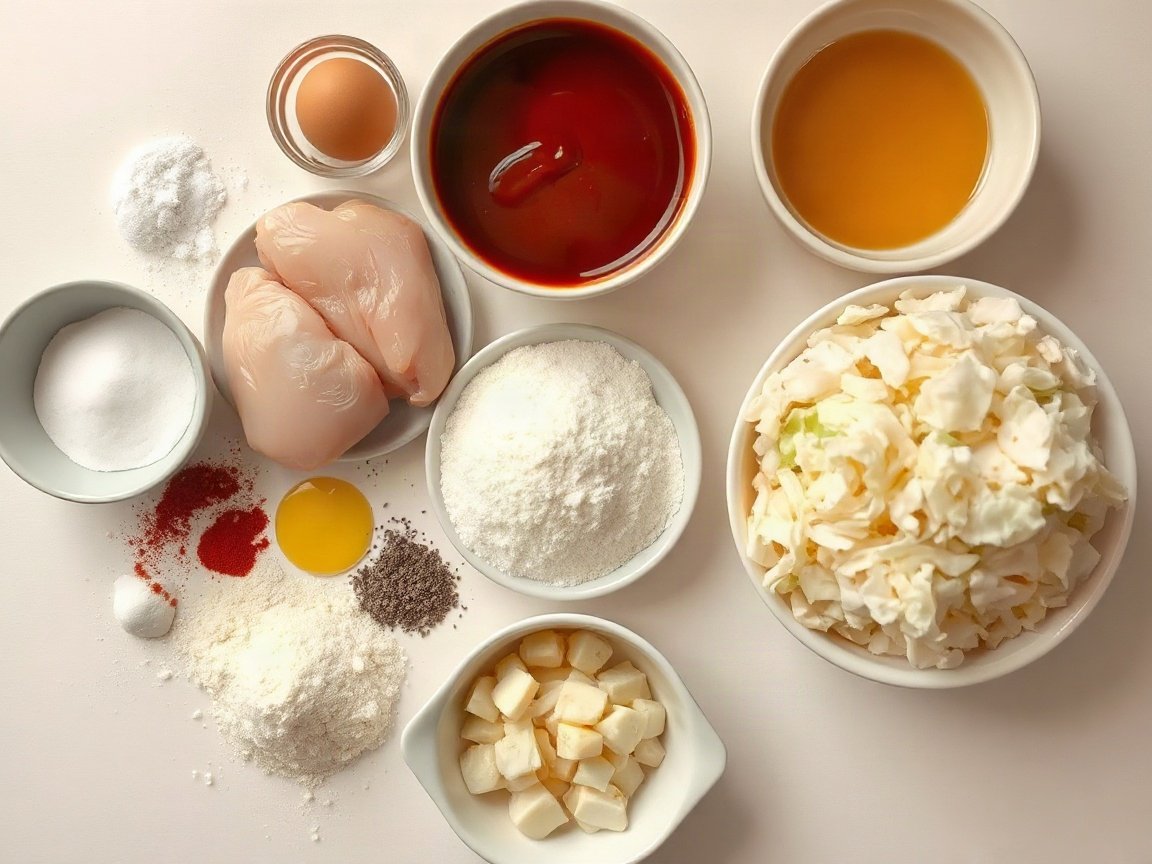
Ingredients for chicken katsu
Exact amounts are in the recipe card below. Here is what each one does and how to choose it.
- Chicken breast: one large boneless, skinless breast. Thighs also work and stay juicier, but they need to be pounded or trimmed to an even thickness.
- Salt, pepper and garlic powder: a simple seasoning that goes under the coating, since the crust itself is mild.
- All-purpose flour and egg: the base of the coating.
- Panko breadcrumbs: use panko rather than regular crumbs for the classic light crunch.
- Vegetable oil: a neutral oil with a high smoke point.
- Ketchup, Worcestershire sauce, soy sauce and sugar: the katsu sauce. Adjust the sugar to taste.
- Cabbage and rice: finely shredded cabbage adds fresh crunch, and rice soaks up the sauce.
How to make chicken katsu
- Cut the breast into two cutlets, pound to an even 1/2 inch and season.
- Set up flour, egg and panko in three dishes.
- Coat each cutlet in flour, egg and panko, pressing the crumbs on firmly.
- Heat the oil to 350°F.
- Fry for 3 minutes per side, until golden and 165°F inside, then rest for 3 minutes on a rack.
- Stir together the ketchup, Worcestershire sauce, soy sauce and sugar.
- Slice the cutlets and serve over rice with cabbage and sauce.
Step-by-step notes
Cutting and pounding. Hold the breast flat and slice it horizontally through the middle, so you get two thin halves. Cover them with plastic wrap and pound gently until they are an even 1/2 inch thick. Season the cutlets on both sides.
Breading. Use one hand for dry ingredients and the other for the egg to avoid clumpy fingers. After the egg, press the cutlet into the panko firmly on both sides until it is fully coated.
Frying. Test the oil with a thermometer; it should read 350°F. Lay each cutlet in away from you and do not move it for the first minute so the crust can set. Turn once, after 3 minutes, and fry the other side for another 3 minutes. Check that the center reads 165°F.
Resting and slicing. Move the cutlets to a clean wire rack for 3 minutes. Slicing too soon pushes the juices out. Cut across into strips so each piece has crust and meat.
Sauce. Stir the sauce ingredients together until smooth. Taste it; add a little more sugar if you like it sweeter, or a drop more Worcestershire sauce for a tangier edge.
Tips for the best chicken katsu
- Pound evenly. Even thickness is the best protection against dry chicken.
- Press the panko on. Firm pressure helps the crumbs stay on in the oil.
- Use a thermometer for the oil. It keeps the crust golden instead of pale or burnt.
- Rest on a rack. It keeps the bottom crisp.
- Slice just before serving. The crust stays crunchiest when cut at the last minute.
Variations
- Chicken thighs: use boneless, skinless thighs of similar total weight, pounded to an even thickness; they fry for the same time and stay a little juicier.
- Katsu sandwich: put a cutlet between two slices of soft white bread with cabbage and sauce.
- Rice bowl: slice the cutlets over rice, add the cabbage and drizzle with the sauce.
- Less sweet sauce: reduce the sugar and add a pinch of ground ginger.
What to serve with chicken katsu
Katsu is traditionally a plate with a few simple parts.
- Steamed white rice: the classic base for the sauce.
- Shredded cabbage: fresh and crunchy against the fried cutlet.
- Pickled cucumbers or carrots: a sharp, bright side.
- Miso soup: a warm starter that rounds out the meal.
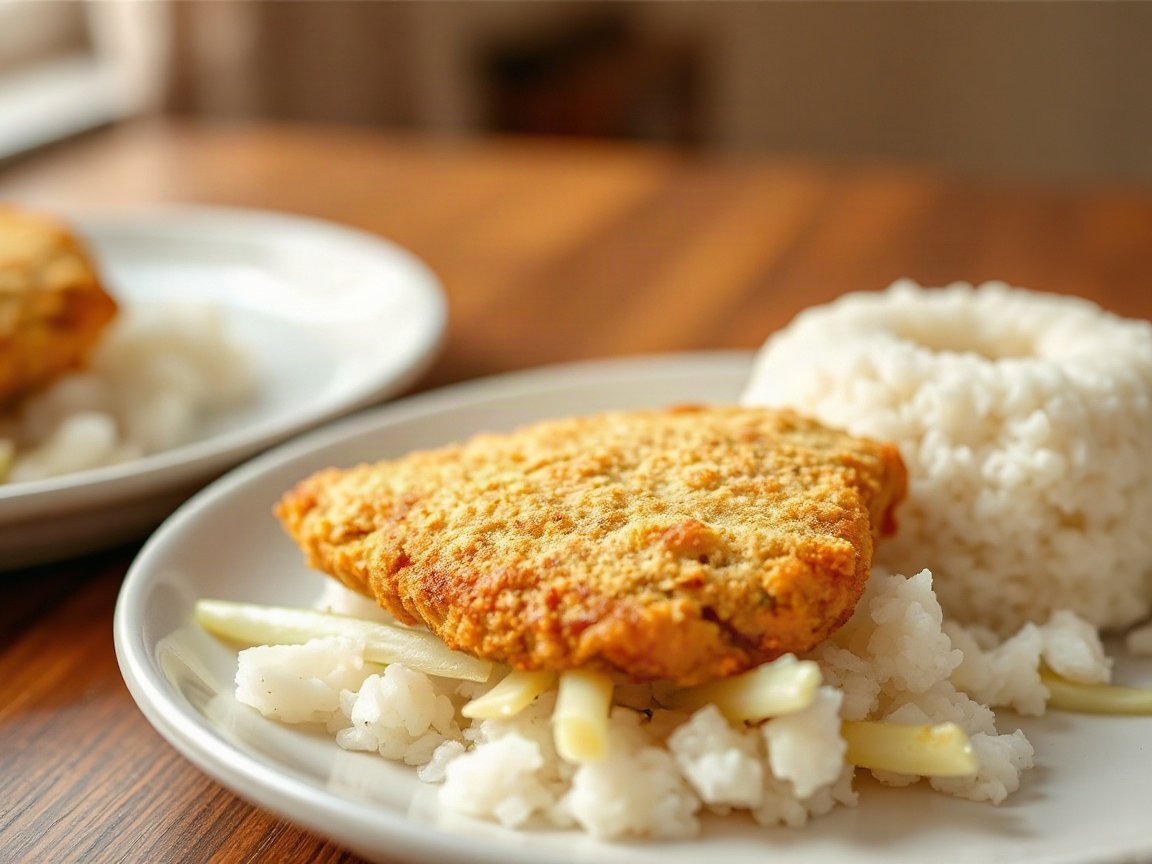
Fan the sliced cutlets across the plate and drizzle on the sauce for a dinner that feels special.
Storage and reheating
Refrigerate leftover cutlets and sauce in separate airtight containers within 2 hours, and eat them within 3 to 4 days. Reheat the cutlets on a rack set over a baking sheet in a 375°F oven until hot throughout; this keeps the crust crisp better than a microwave. Leftovers are good in a sandwich or over rice.
Crisp, golden and easy to share, this is a cozy dinner that comes together fast. Drizzle on the sauce and enjoy every crunchy bite together.
Frequently asked questions
What is the difference between chicken katsu and chicken tonkatsu?
Katsu is the Japanese word for a breaded, fried cutlet. Chicken katsu uses chicken, while tonkatsu is made with a different meat. The coating and the sauce are the same.
What do you serve with chicken katsu?
Steamed white rice and shredded cabbage with katsu sauce is the classic plate. Pickles and miso soup also pair well.
How do I keep the panko crispy?
Press the crumbs on firmly, fry in 350°F oil, and rest the cutlets on a wire rack instead of a plate so steam can escape.
Can I bake chicken katsu?
You can, but this recipe is written for pan-frying, which gives the best crust. If you bake, use a rack and spray the crumbs lightly with oil, and cook until the chicken reaches 165°F.
Print
Chicken Katsu for Two
- Total Time: 35 minutes
- Yield: 2 cutlets
Description
Crisp panko-crusted chicken cutlets pan-fried until golden, sliced and served with homemade katsu sauce, rice and cabbage, sized for two.
Ingredients
- 1 large boneless, skinless chicken breast (about 12 ounces)
- 1/2 teaspoon salt
- 1/4 teaspoon black pepper
- 1/2 teaspoon garlic powder
- 1/3 cup all-purpose flour
- 1 large egg, beaten
- 3/4 cup panko breadcrumbs
- 3/4 cup vegetable oil, for frying
- 3 tablespoons ketchup
- 1 tablespoon Worcestershire sauce
- 1 teaspoon soy sauce
- 1 teaspoon sugar
- 1 cup finely shredded cabbage, to serve
- 2 cups cooked white rice, to serve
Instructions
- Cut the chicken breast in half horizontally to make two thin cutlets. Place them between sheets of plastic wrap and pound to an even 1/2 inch. Season both sides with the salt, pepper and garlic powder.
- Set up three shallow dishes: the flour in one, the beaten egg in the second and the panko in the third.
- Coat each cutlet in flour and shake off the extra, dip it in the egg, then press it firmly into the panko on both sides. Set the cutlets on a wire rack.
- Heat the oil in the skillet over medium-high heat to 350°F.
- Fry the cutlets for 3 minutes per side, until deep golden and 165°F in the thickest part. Move them to a clean rack and rest for 3 minutes.
- While the cutlets rest, stir the ketchup, Worcestershire sauce, soy sauce and sugar together in a small bowl.
- Slice the cutlets into strips. Serve over the rice with the cabbage and the sauce.
Notes
Equipment: 10-inch skillet, meat mallet or rolling pin, wire rack, three shallow dishes, instant-read thermometer
- Pound the chicken to an even thickness so both ends finish together.
- Press the panko on firmly; loose crumbs fall off in the oil.
- Rest the cutlets on a wire rack, not a plate, so the underside stays crisp.
- Keep the oil near 350°F; cool oil makes greasy cutlets and hot oil browns the crumbs before the center is cooked.
- For a bit of tang, stir a pinch of mustard powder into the sauce.
- Doneness: The cutlets are done when the coating is deep golden and an instant-read thermometer reads 165°F in the thickest part.
- Doneness: The coating should feel dry and crisp after the rest on the rack.
- Refrigerate leftover cutlets and sauce separately in airtight containers within 2 hours and eat within 3 to 4 days. Reheat the cutlets on a rack in a 375°F oven until hot throughout.
- Cook chicken to an internal temperature of 165°F (USDA FSIS).
- Refrigerate leftovers within 2 hours.
- Wash hands, the board and tools after handling raw chicken and raw egg.
- Prep Time: 20 minutes
- Cook Time: 15 minutes
- Category: Main Course
- Method: Pan-Fried
- Cuisine: Japanese