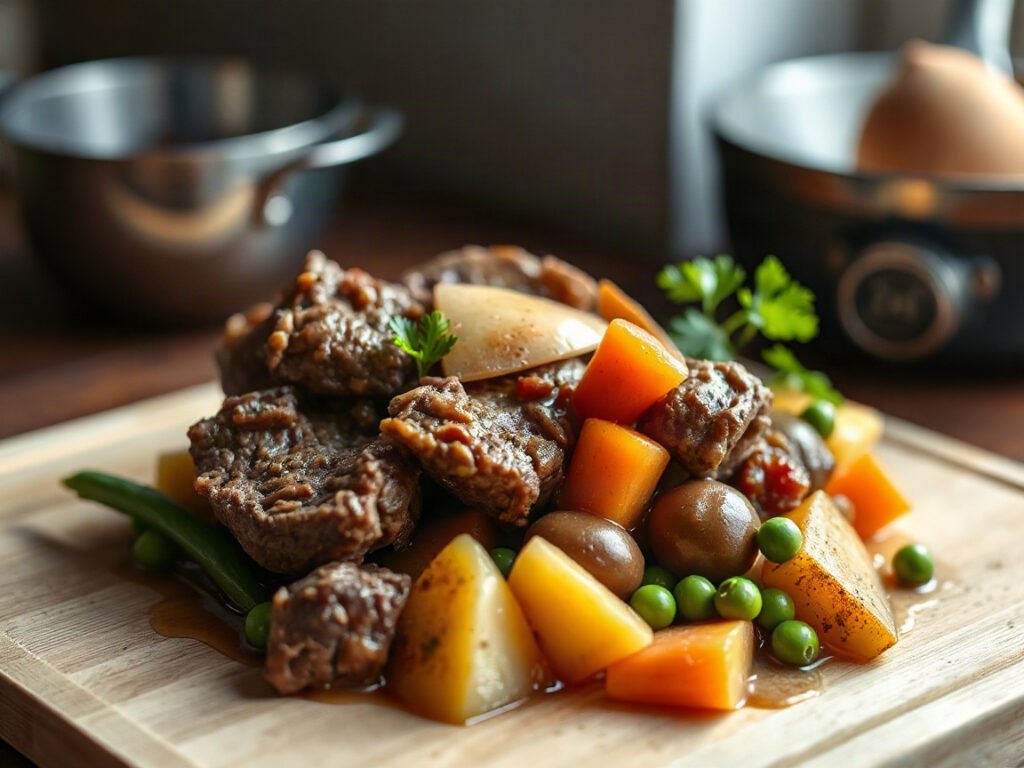
This beef stew for two is the classic version you want on a chilly evening: tender chunks of beef, soft potatoes and sweet carrots in a rich, savory broth. It makes two generous bowls in one small pot, so you get the slow-simmered comfort of a big Sunday stew without a week of leftovers. The secret is simple: brown the chuck well, keep the pot at a gentle simmer, and add the vegetables partway through so everything turns tender at the same time. There’s no wine in it, just tomato paste and a splash of Worcestershire for depth, which means you can make it with what is already in the pantry.
Why you’ll like this stew
- Made for two. 12 ounces of beef gives two hearty bowls, no giant pot and no freezer full of extras.
- Truly tender beef. Chuck simmers slowly until it falls apart under a fork.
- One pot. The beef, the vegetables and the broth all cook in the same Dutch oven.
- No wine needed. Tomato paste, Worcestershire and browned bits build a deep, savory broth.
- Mostly hands-off. About 20 minutes of prep, then the stove does the work while you get on with your evening.
What makes this small-batch beef stew work
Chuck, not lean steak. Chuck roast has plenty of connective tissue and marbling. Over a long, gentle simmer that tissue melts into the broth, so the meat turns silky and the stew tastes rich. Lean cuts cook faster but stay firm and can turn dry.
A pot that fits the batch. A 3-quart Dutch oven holds 12 ounces of beef in a single layer for browning, and later keeps it covered with just 2 cups of broth. In a big pot the same amount of liquid spreads out thin and evaporates, leaving the beef exposed.
Vegetables in stages. The beef needs a head start. Carrots and potatoes go in for the final 35 minutes, so they turn tender without falling apart into the broth. Peas go in at the very end to stay bright green.
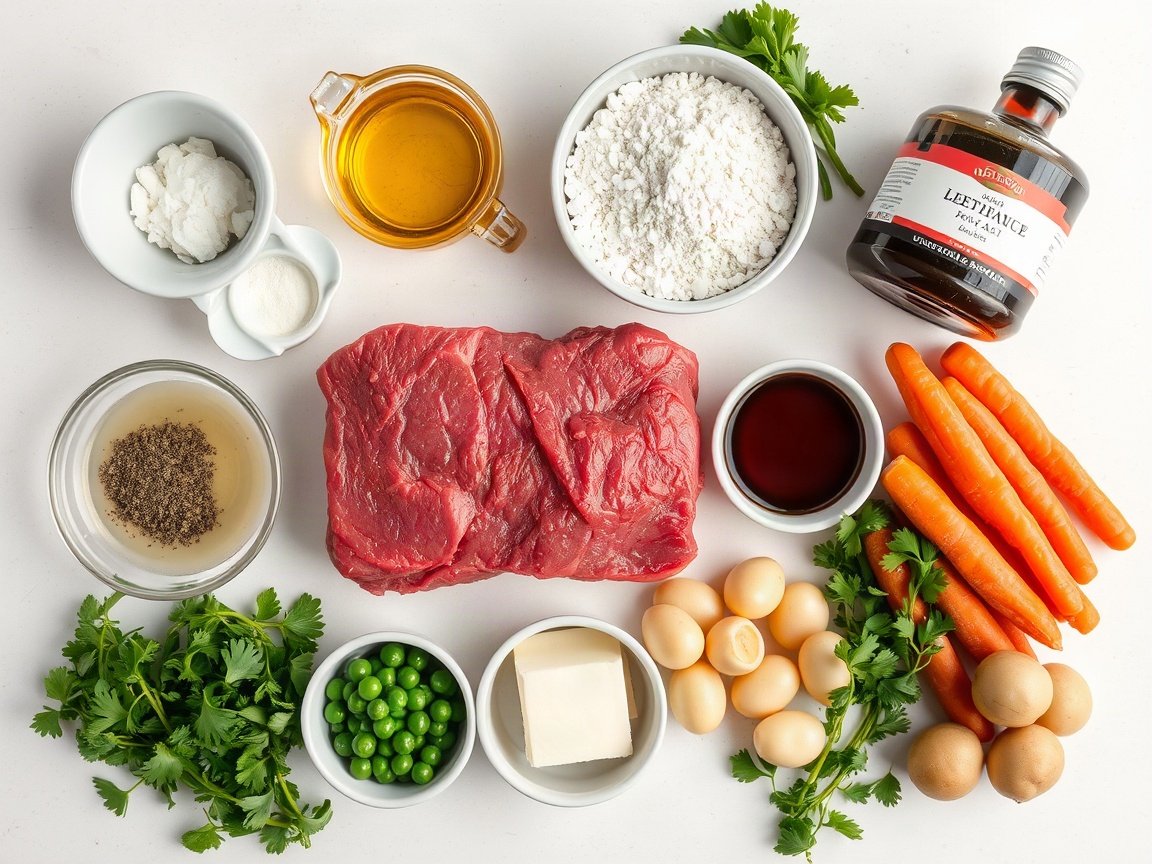
Ingredients for beef stew for two
The exact amounts are in the recipe card below. These notes cover the choices that make the biggest difference.
- Boneless beef chuck roast: buy a small chuck roast or chuck steak and cut it yourself into even 1-inch pieces, trimming off large pieces of hard fat. Packages labeled stew meat can be a mix of cuts that cook at different speeds, so cutting your own gives more even results.
- Flour: a light coating on the beef helps it brown and thickens the broth as the stew simmers, so there’s no extra thickening step at the end.
- Tomato paste and Worcestershire sauce: together they stand in for the wine many stews use, adding savory depth and a little tang. Cook the tomato paste for a minute so it loses its raw edge.
- Low-sodium beef broth: the broth reduces a little as it simmers, so starting low in salt lets you season at the end without the stew turning too salty.
- Yukon Gold potatoes: their creamy, medium-starch texture holds its shape in a stew better than russets, which tend to crumble.
- Carrots, onion, garlic and thyme: the classic flavor base. Dried thyme works well here because it has time to soften and bloom in the broth.
How to make beef stew for two
- Dry the beef, season it and toss it with the flour.
- Brown the beef in a 3-quart Dutch oven, then set it aside.
- Soften the onion, then cook the garlic, tomato paste and thyme.
- Add the broth, Worcestershire, bay leaf and beef, and simmer gently, covered, for 75 minutes.
- Add the carrots and potatoes and simmer, covered, for 35 minutes until everything is tender.
- Stir in the peas, season and finish with parsley.
Step-by-step notes
Browning the beef. Dry beef browns; wet beef steams. Pat the pieces dry before seasoning, heat the oil until it shimmers, and lay the beef in a single layer with a little space between pieces. Leave it alone long enough to release from the pot before turning. After about 6 minutes, most pieces should be deep brown on a few sides. They will not be cooked through, and that’s fine.
Keeping a bare simmer. Once the stew comes to a boil, turn the heat to low and look for small, lazy bubbles breaking the surface every second or two. Burners vary, so peek under the lid after a few minutes and adjust. A rolling boil tightens the meat and breaks up the potatoes.
Testing for tenderness. Chuck can take a little longer depending on the piece. After the vegetables have simmered for 35 minutes, pull out a piece of beef and press it with a fork. It should give easily and start to shred. If it still feels springy, cover the pot and give it 10 minutes more.
Tips for the best beef stew
- Cut the beef evenly. Pieces of the same size become tender at the same time.
- Scrape up the browned bits. When the broth goes in, use a wooden spoon to loosen everything stuck to the bottom of the pot. That’s where much of the flavor lives.
- Press the vegetables under the broth. When you add the carrots and potatoes, nudge them down so they cook evenly.
- Thicken by reducing. If you like a thicker stew, leave the lid off for the last few minutes before the peas go in.
- Season at the end. Taste after the peas are hot and add salt only then, since the broth concentrates as it cooks.
Substitutions and variations
Potatoes: two medium red potatoes can replace the Yukon Golds; they hold their shape just as well and cook in the same time.
Parsley: it’s optional and only adds a fresh finish, so leave it out if you don’t have any.
Peas: skip them if you prefer a stew of just carrots and potatoes; nothing else changes.
What to serve with beef stew
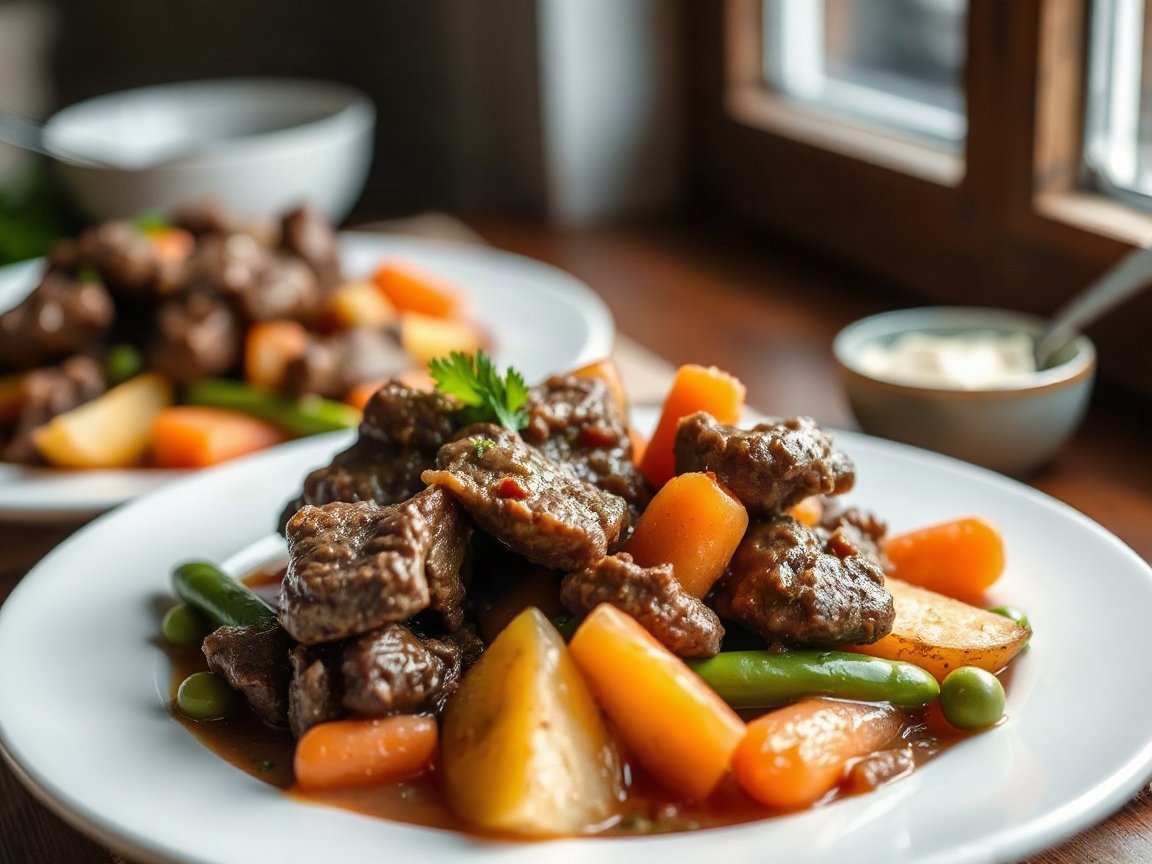
Beef stew is a full meal in a bowl, so it needs very little alongside it. Crusty bread or warm biscuits are perfect for soaking up the broth. A simple green salad with a sharp vinaigrette balances the richness. For an even heartier dinner, spoon the stew over buttered egg noodles or a scoop of mashed potatoes. Set out two big bowls and a loaf of bread, and it feels like a proper cold-weather night in.
Storage, freezing and reheating
If you do have leftovers, refrigerate them in an airtight container within 2 hours and eat them within 3 to 4 days. Stew often tastes even better the next day once the flavors settle. You can also freeze it for up to 3 months; the potatoes soften a little after freezing but the stew is still very good.
To reheat, warm the stew in a saucepan over medium-low heat, stirring now and then, and add a splash of broth or water if it has thickened in the refrigerator. Heat it until it reaches 165°F. Braised until fork-tender, the beef is already cooked well past the USDA minimum of 145°F for beef.
A small pot of beef stew bubbling away is one of the coziest ways to spend an evening for two. Make it on the first cold night of the season and enjoy every last spoonful together.
Frequently asked questions
What is the best cut of beef for stew?
Chuck is the best choice for a classic stew. Its marbling and connective tissue melt during a long, gentle simmer, leaving the meat tender and the broth rich.
Can I make beef stew without wine?
Yes. This recipe uses none; tomato paste, Worcestershire sauce and the browned bits from searing the beef give the broth plenty of depth.
How do I thicken beef stew?
The flour on the beef thickens the broth as it simmers. For a thicker stew, simmer it uncovered for the last few minutes before adding the peas.
Can I freeze beef stew?
Yes. Freeze it in an airtight container for up to 3 months. The potatoes soften a little, so reheat gently on the stove and add a splash of broth if needed.
Print
Beef Stew for Two
- Total Time: 2 hours 25 minutes
- Yield: 2 servings
Description
Tender chuck simmered with carrots and potatoes in a rich, wine-free broth, sized for two generous bowls in one small pot.
Ingredients
- 12 ounces boneless beef chuck roast, trimmed and cut into 1-inch pieces
- 1/2 teaspoon salt, plus more to taste
- 1/4 teaspoon black pepper
- 1 tablespoon all-purpose flour
- 1 tablespoon vegetable oil
- 1 small onion, chopped
- 2 cloves garlic, minced
- 1 tablespoon tomato paste
- 1/2 teaspoon dried thyme
- 2 cups low-sodium beef broth
- 1 teaspoon Worcestershire sauce
- 1 bay leaf
- 2 medium carrots, peeled and cut into 3/4-inch pieces
- 8 ounces Yukon Gold potatoes (about 2 small), cut into 3/4-inch pieces
- 1/2 cup frozen peas
- 1 tablespoon chopped fresh parsley (optional)
Instructions
- Pat the beef dry with paper towels. In a medium bowl, toss it with the salt and pepper, then sprinkle in the flour and toss until evenly coated.
- Heat the oil in a 3-quart Dutch oven over medium-high heat until it shimmers. Add the beef in a single layer and brown it, turning a few times, for about 6 minutes, until browned on several sides. Transfer the beef to a plate.
- Reduce the heat to medium. Add the onion and cook, stirring, for 5 minutes, until softened. Add the garlic, tomato paste and thyme and cook, stirring, for 1 minute.
- Pour in the broth and scrape up the browned bits from the bottom of the pot. Stir in the Worcestershire sauce, bay leaf and the beef with any juices. Bring to a boil, then reduce the heat to low, cover and simmer gently for 75 minutes, stirring once or twice. Keep the liquid at a bare simmer with small bubbles.
- Add the carrots and potatoes, pressing them into the liquid. Cover and simmer for 35 minutes, until the beef is fork-tender and the vegetables are tender when pierced with a knife. If the beef still resists, simmer 10 minutes more.
- Stir in the peas and cook uncovered for 2 minutes, until hot. Remove the bay leaf, taste and add salt if needed, then sprinkle with parsley and serve.
Notes
Equipment: 3-quart Dutch oven or heavy saucepan with a lid, cutting board, chef’s knife, medium bowl, wooden spoon
- Chuck needs the long, gentle simmer to turn tender; a hard boil makes it tougher and breaks up the potatoes.
- Brown the beef in one uncrowded layer so it sears instead of steaming.
- For a thicker stew, simmer uncovered for the last few minutes before adding the peas.
- Two medium red potatoes can replace the Yukon Golds; they hold their shape the same way.
- Refrigerate leftovers in an airtight container within 2 hours and eat within 3 to 4 days, or freeze for up to 3 months; the potatoes soften a little after freezing.
- Reheat in a saucepan over medium-low heat, adding a splash of broth or water if it has thickened, until it reaches 165°F.
- Braised until fork-tender, the beef is cooked well past the USDA minimum of 145°F for beef.
- Do not leave the cooked stew at room temperature for more than 2 hours (USDA FSIS).
- Prep Time: 20 minutes
- Cook Time: 2 hours 5 minutes
- Category: Dinner
- Method: Stovetop
- Cuisine: American