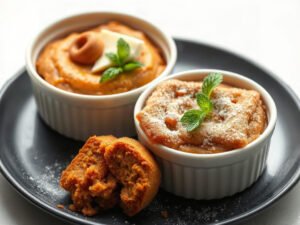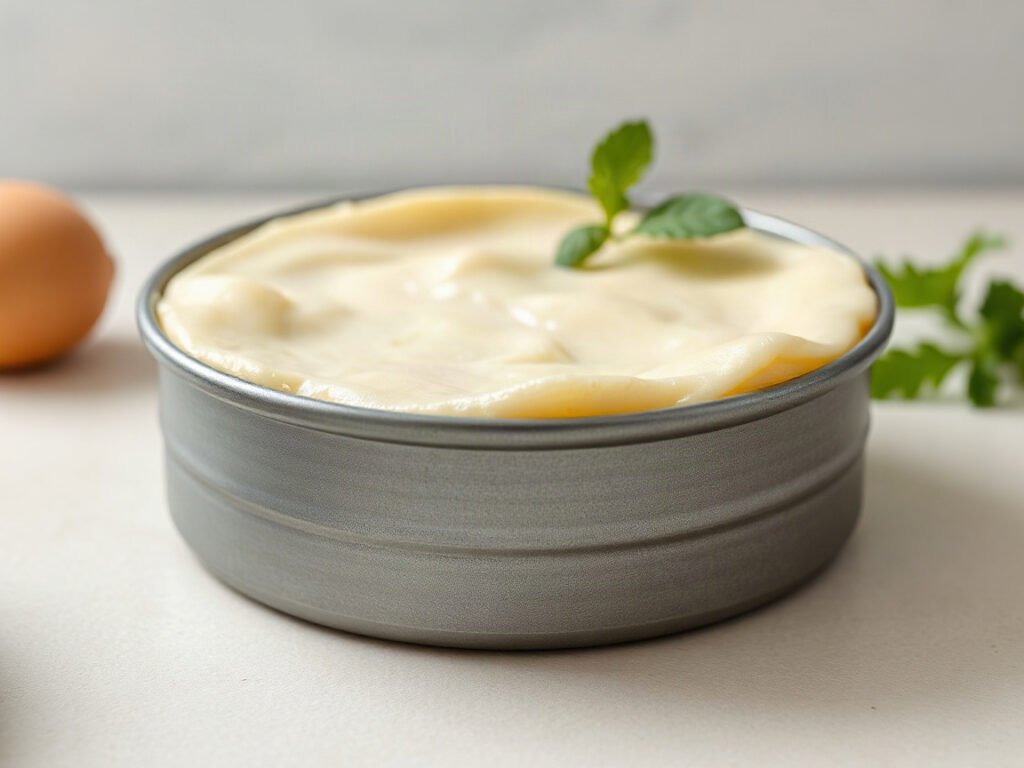
Basque cheesecake is the crustless cheesecake with the dramatic, deeply browned top and a soft, creamy middle. This version is sized for the two of you: one brick of cream cheese and two eggs bake in a little 4-inch springform pan, so you get two generous slices instead of a whole cake to work through. A very hot oven does the work that a crust and a water bath do in other cheesecakes, which makes this one of the simplest baked desserts you can make. I kept the ingredient list to six pantry staples so it is easy to decide on a Friday afternoon and serve the same evening.
Why you’ll like this small cheesecake
- Made for two. A 4-inch cake cuts into two proper slices, and the recipe uses exactly one brick of cream cheese, so nothing is left in the fridge.
- No crust, no water bath. The batter goes straight into a parchment-lined pan, and the oven does the rest.
- One bowl. A hand mixer or even a sturdy whisk is all you need.
- The cracked top is the point. Rustic edges and a dark, caramelized surface are what Basque cheesecake should look like, so there is no pressure to get a smooth, perfect top.
- Make it ahead. It holds well in the fridge, so dessert can be ready before dinner starts.
What Basque cheesecake is
The style comes from San Sebastian in Spain’s Basque Country, where it was created at a small bar called La Viña around 1990. It spread around the world through food blogs and bakeries and is now on restaurant menus everywhere, which is why so many people are searching for a version to bake at home.
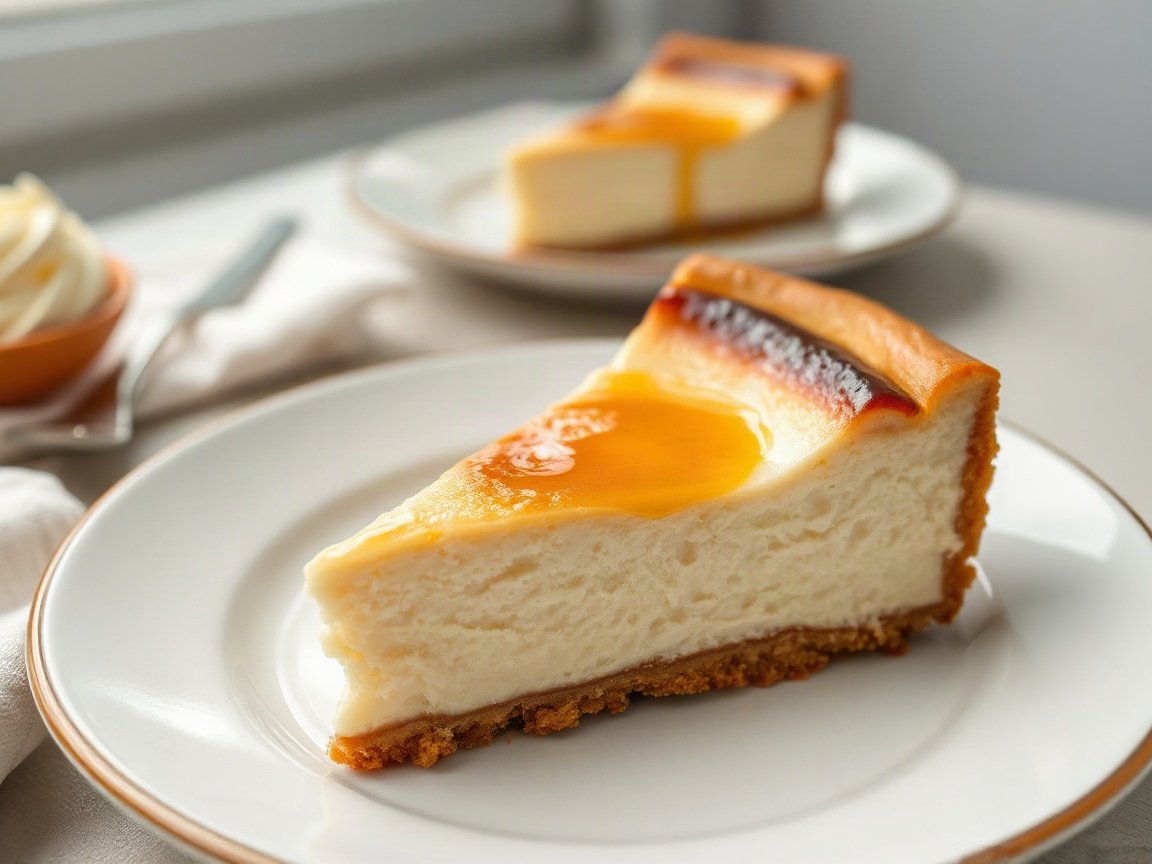
Compared with a New York cheesecake, it is lighter and softer, closer to a set custard than a dense slab. There is no graham cracker base and no slow, gentle bake. Instead, the batter is baked at a high temperature so the outside sets and the top caramelizes to a deep, almost burnt brown while the middle stays creamy. That is why you will also see it called burnt Basque cheesecake. The browned top tastes like toasted caramel, not like something scorched, and it is the best contrast to the mild, tangy center.
What makes this small cake work
A 4-inch springform. Most recipes use a 6-inch pan or larger and serve four to eight people or more. Halving a 6-inch recipe and baking it in a 4-inch pan keeps the batter about as deep as the full-size version, so the top browns and the center cooks in the right balance.
A tall parchment collar. The cake puffs well above the pan as it bakes and then sinks as it cools. Parchment that stands about 2 inches above the rim holds it in place and gives the cake its rumpled, rustic sides. Crumpling the parchment first makes it soft enough to press into a small round pan.
A hot oven and a thermometer. At 425°F the top darkens quickly, which a small cake needs because it cooks through faster than a big one. An instant-read thermometer takes the guesswork out of the jiggly center: when the middle reads 160°F, the eggs are cooked to a safe temperature and the cake will set as it cools.
Gentle mixing. Beating too much air into the batter makes the cake soar and then collapse hard. Mixing on low once the eggs go in keeps the texture smooth and creamy.
Ingredients for Basque cheesecake for two
The exact amounts are in the recipe card below. These notes cover the choices that matter.
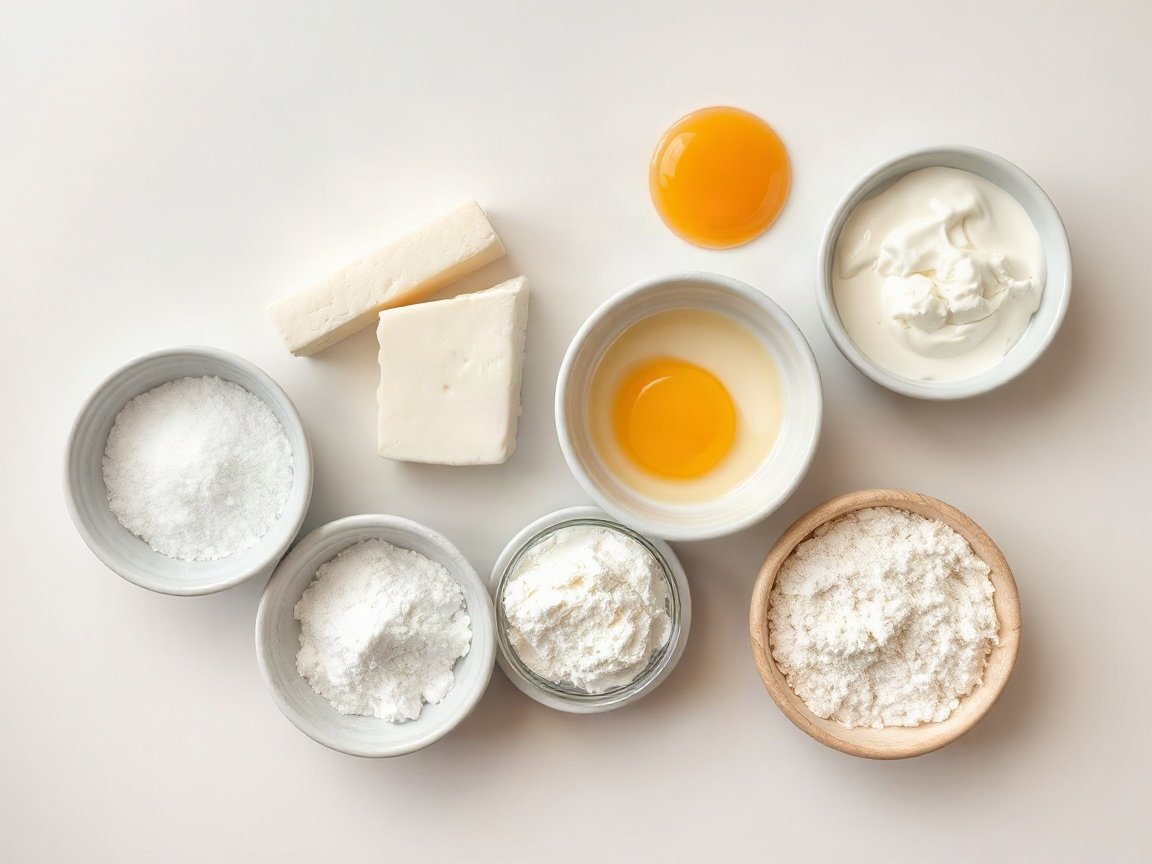
- Cream cheese: use 8 ounces of full-fat brick cream cheese, the kind sold in foil-wrapped blocks. Tub-style spreadable cream cheese is softer and makes a looser cake. Let it sit out until it is soft all the way through.
- Sugar: plain granulated sugar sweetens the batter and helps the top caramelize.
- Eggs: two large eggs, also at room temperature, so they blend into the cream cheese without leaving lumps.
- Heavy cream: it loosens the batter and gives the center its silky texture. Lighter milk or half-and-half makes a thinner, less creamy cake.
- Flour: just 1 tablespoon of all-purpose flour helps such a small cake hold a clean slice. You can leave it out; see the swaps below.
- Salt: a pinch balances the sweetness and brings out the caramel flavor of the top.
How to make Basque cheesecake
- Bring the cream cheese and eggs to room temperature and heat the oven to 425°F.
- Line a 4-inch springform with crumpled parchment that stands above the rim, and set it on a rimmed baking sheet.
- Beat the cream cheese, sugar and salt until completely smooth.
- Mix in the eggs one at a time on low, then the cream, then whisk in the flour.
- Bake for about 35 minutes, until the top is deep brown and the center reads 160°F.
- Cool in the pan for 2 hours, then release, peel back the parchment and slice.
Baking and cooling cues
Smooth batter first. Before the eggs go in, the cream cheese and sugar should look glossy and completely smooth, with no small white lumps when you scrape the bottom of the bowl. Lumps at this stage stay lumps, so give it an extra minute of mixing now rather than later.
What done looks like. Start checking at 30 minutes. The cake will have puffed well above the pan, the top will be a deep mahogany brown with a few nearly black patches, and the edges will look set. Give the baking sheet a gentle nudge: the center should still wobble like soft custard. Slide an instant-read thermometer into the middle; when it reads 160°F, the cake is ready. If the center is there but the top is still pale, your oven may run cool. Take the cake out anyway and bake the next one a rack higher.
Let it sink. As it cools, the cake falls and the center firms up. That dip in the middle is normal and part of the look. After 2 hours on a rack it will be set enough to slice at room temperature with a creamy, soft center. For a firmer, denser slice, chill it before cutting.
Clean slices. Dip a sharp knife in hot water, wipe it dry, and make one cut straight down the middle. Wipe and warm the knife again before a second cut.
Tips for a creamy, dark-topped cheesecake
- Plan the softening time. Set the cream cheese and eggs out about 60 minutes before you start. Soft cream cheese is the key to a smooth batter without overmixing.
- Use the baking sheet. It catches any drips and makes the tiny pan easy to move in and out of the oven.
- Bake in the middle of the oven. It gives even heat around a small pan.
- Trust the thermometer over the wobble. The center always looks underdone when it comes out; the temperature tells you it is cooked.
- Refrigerate within two hours. Once the cake has cooled, cover it and move it to the fridge if you are not serving it right away.
Substitutions and variations
Flour-free: leave out the flour for a version without wheat. The cake is a little softer and slices less cleanly, but the flavor is the same.
No springform: a 4-inch round cake pan at least 3 inches deep works. Line it the same way, and once the cake has cooled, lift it out by the parchment.
Toppings instead of mix-ins: keep the batter plain so it bakes evenly, and add flavor on the plate with fruit or a drizzle of honey.
How to serve it
Cut the cake in half for two generous slices, or into quarters if you want a lighter dessert tonight and another tomorrow. At room temperature, the center is soft and creamy; straight from the fridge, it is firmer and richer, more like a classic cheesecake. Both are good, so serve it the way you like best.
It needs nothing on top, but fresh berries, sliced figs or a spoonful of warm cherries are lovely against the caramelized top. A cup of strong coffee or espresso alongside is a classic match. It is the kind of small dessert that makes an ordinary weeknight feel like an occasion for two. If you like cheesecake without turning on the oven, the Greek yogurt cheesecake for two is a no-bake option served in jars.
How to store leftover cheesecake
Cover any leftover cheesecake and keep it in the refrigerator for up to 4 days. The top softens a little in the fridge, but the flavor stays the same. Let a cold slice sit out for a short while if you prefer a creamier center.
To freeze, wrap slices well and freeze them for up to 2 months. Thaw them overnight in the refrigerator rather than on the counter.
One brick of cream cheese, a hot oven and a little patience while it cools are all it takes. Slice it in half, pour the coffee, and enjoy a proper dessert made just for the two of you.
Frequently asked questions
What is Basque cheesecake?
It is a crustless cheesecake from San Sebastian in Spain, baked at a high temperature so the top turns deep brown and caramelized while the center stays soft and creamy. It has no crust and needs no water bath.
What does Basque cheesecake taste like?
The center tastes like a light, creamy, gently tangy cheesecake, and the dark top adds a toasted caramel flavor. It is less dense than New York style.
Is Basque cheesecake supposed to be burnt?
The top should be very dark brown, almost black in spots, which is why it is often called burnt Basque cheesecake. It tastes caramelized, not bitter, as long as the color is deep brown rather than charred all over.
Can I make Basque cheesecake without flour?
Yes. Leave out the flour and bake it the same way. The cake is slightly softer and slices less neatly.
Print
Basque Cheesecake for Two
- Total Time: 2 hours 50 minutes
- Yield: one 4-inch cheesecake
Description
A small crustless Basque cheesecake for two: one brick of cream cheese and two eggs baked hot in a 4-inch springform until the top is deep brown and the center creamy.
Ingredients
- 8 ounces full-fat brick cream cheese, at room temperature
- 1/2 cup granulated sugar
- 1 pinch salt
- 2 large eggs, at room temperature
- 1/4 cup heavy cream, at room temperature
- 1 tablespoon all-purpose flour
Instructions
- Set the cream cheese and eggs out about 60 minutes ahead so they come to room temperature. Heat the oven to 425°F with a rack in the middle.
- Crumple a sheet of parchment paper, flatten it out and press it into a 4-inch springform pan so it covers the bottom and sides and stands about 2 inches above the rim. Set the pan on a rimmed baking sheet.
- Beat the cream cheese, sugar and salt in a mixing bowl until completely smooth, with no lumps of cream cheese left.
- Add the eggs one at a time on low speed, mixing just until each one disappears. Mix in the cream, then sprinkle the flour over the batter and whisk gently until no dry bits remain.
- Pour the batter into the lined pan. Bake for about 35 minutes, checking from 30 minutes, until the top is deep brown, the edges are set and puffed, the center still jiggles when you nudge the pan and an instant-read thermometer in the center reads 160°F.
- Let the cheesecake cool in the pan on a cooling rack for 2 hours; it sinks and sets as it cools. Release the ring, peel back the parchment and slice with a knife dipped in hot water and wiped dry. Serve at room temperature, or refrigerate for a firmer, denser slice.
Notes
Equipment: 4-inch springform pan, parchment paper, rimmed baking sheet, mixing bowl, hand mixer or whisk, instant-read thermometer, cooling rack
- Room-temperature cream cheese and eggs blend smooth without overmixing; cold cream cheese leaves lumps.
- Mix on low once the eggs go in so the batter does not take on extra air, which makes the cake rise and fall sharply.
- If the top is still pale when the center reaches 160°F, the oven may run cool; next time bake one rack higher.
- A 4-inch round cake pan at least 3 inches deep works instead of a springform; lift the cake out by the parchment once it has cooled.
- For a flour-free version, leave out the flour; the cake is a little softer and slices less cleanly.
- Refrigerate leftover cheesecake, covered, for up to 4 days.
- Freeze wrapped slices for up to 2 months and thaw them overnight in the refrigerator.
- Bake until the center reaches 160°F, the minimum internal temperature for egg dishes (FoodSafety.gov).
- Refrigerate the cheesecake within 2 hours of baking (FoodSafety.gov).
- Prep Time: 15 minutes
- Rest Time: 2 hours
- Cook Time: 35 minutes
- Category: Dessert
- Method: Baked
- Cuisine: Spanish